
What Is Bitcoin Dominance and How To Use It?


Navigating the ever-changing cryptocurrency market can be challenging, especially with fluctuating trends and shifting investor sentiment. One essential tool that provides clarity amid this complexity is Bitcoin dominance. This metric illustrates Bitcoin’s share of the total cryptocurrency market capitalization and reflects how capital rotates between Bitcoin and alternative cryptocurrencies (altcoins).
A rise in Bitcoin dominance often signals that investors are seeking stability and reducing exposure to higher-risk altcoins. Conversely, a decline may indicate growing speculation and increased interest in altcoins. Whether you’re building a diversified portfolio or just beginning your crypto journey, understanding Bitcoin dominance can offer valuable insight into market dynamics and help inform your strategic decisions.
In this article, we’ll explore what Bitcoin dominance is, how it’s calculated, what its movements reveal, and how you can apply this knowledge to enhance your investment approach.
What Is Bitcoin Dominance?
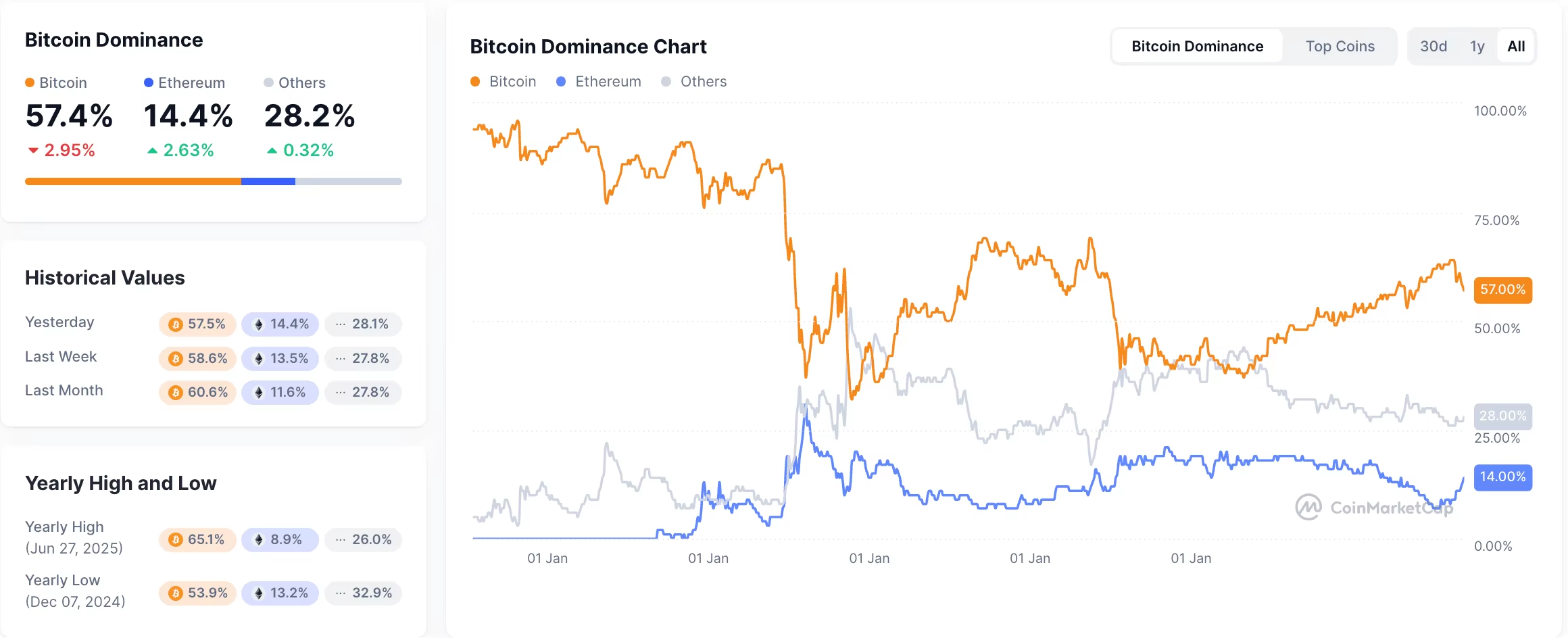
Bitcoin Dominance represents the proportion of the total cryptocurrency market capitalization that is attributed to Bitcoin. In essence, this metric highlights how much of the overall crypto investment is concentrated in Bitcoin compared to altcoins.
As the original and largest cryptocurrency by market value, Bitcoin often serves as a benchmark for the broader digital asset market. An increase in Bitcoin dominance typically suggests that investors are moving toward perceived safety and stability, often during times of uncertainty. A decrease, on the other hand, may indicate growing appetite for risk and speculation in altcoins.
Monitoring Bitcoin dominance can offer valuable insights into market sentiment, help detect trend transitions, and support more strategic asset allocation decisions.
Source: CoinMarketCap
What Influences Bitcoin Dominance?
Bitcoin dominance can be affected by a variety of factors — both internal to the crypto market and external in the global economy.
How To Use Bitcoin Dominance in Trading
Bitcoin dominance should not be used in isolation—but it can serve as a valuable tool for making more informed decisions.
Here’s how many investors apply it:
- Adjusting Exposure: Increase or decrease allocation to Bitcoin versus altcoins in response to dominance trends.
- Gauging Market Sentiment: Rising dominance may reflect risk-off sentiment, while declining dominance often signals altcoin speculation.
- Identifying Reversals: Sharp changes in dominance can indicate market rotation or the end of a trend.
When combined with technical analysis, sentiment indicators, and macroeconomic insight, Bitcoin dominance adds meaningful context to both short-term trading and long-term investment strategies.
What Does High/Low Bitcoin Dominance Mean?
High Bitcoin Dominance (Above 60–65%)
A high Bitcoin dominance level indicates that the majority of capital within the cryptocurrency market is flowing into Bitcoin rather than alternative coins. This typically reflects a cautious or risk-averse sentiment among investors, who may be seeking the relative stability and established reputation of Bitcoin during uncertain market conditions. Such periods often coincide with Bitcoin-centric bull runs or broader market corrections.
Low Bitcoin Dominance (Below 50%)
A decline in Bitcoin dominance suggests that investors are increasingly allocating funds to altcoins, demonstrating growing confidence in alternative crypto projects and ecosystems. This environment frequently aligns with “altcoin seasons,” where tokens such as Ethereum, Solana, or various meme coins experience significant outperformance compared to Bitcoin, pointing to a more speculative and opportunity-driven market mood.
Bitcoin Dominance vs. Altcoin Season
Altcoin season occurs when altcoins deliver substantially higher returns than Bitcoin, typically triggered by a decline in Bitcoin’s market dominance below critical levels—often around 50%. During these phases, investors shift capital from Bitcoin into smaller-cap altcoins, driving rapid price appreciation across the broader crypto market.
Historically, altcoin rallies have followed strong Bitcoin bull runs, emerging once BTC’s upward momentum slows. Notable examples include the surges in 2017 and 2021, where declining Bitcoin dominance coincided with explosive altcoin performance. However, past trends do not guarantee future outcomes, as market conditions evolve with each cycle.
While Bitcoin dominance serves as a useful benchmark, traders should combine it with additional metrics—such as trading volume, trend strength, and individual altcoin market caps—to assess opportunities more accurately. A multi-indicator approach helps navigate the volatility and timing challenges inherent in altcoin seasons.
Conclusion
Bitcoin Dominance might sound complex, but it’s actually one of the easiest ways to gauge the crypto market’s health. For new traders, watching this metric can be a game-changer—whether you're looking for the right time to buy altcoins, manage risk, or just understand where the market stands.
Next time you check Bitcoin’s price, take a quick look at its dominance too. That one number could give you the edge you need to trade smarter.
Further Reading
You may also like

How to Buy Apple Stock on WEEX TradfFi in 2026: A Guide for TradFi and Crypto Investors
Apple remains a $4 trillion tech powerhouse — but traditional brokerages are no longer your only option. Here’s how to invest in 2026.
Key TakeawaysApple (AAPL) trades near its all-time highs, with analyst targets averaging $310 per share for 2026 — a potential 10%+ upside from current levelsYou can now gain exposure to Apple’s stock price 24/7 through WEEX TradFi perpetual futures — no brokerage account, no fiat deposit, no KYC hasslesUnlike traditional brokers, WEEX lets you trade Apple with USDT collateral, adjustable leverage (up to 100x), and the same interface crypto traders already useOld Way: How to Buy Apple Stock Through a BrokerageBefore we explore better alternatives, here’s how traditional investors buy Apple shares:
Step 1: Choose a regulated brokerage (Fidelity, Schwab, Robinhood, etc.)Step 2: Complete identity verification and KYC (can take 2-5 business days)Step 3: Fund your account with USD via bank wire (another 1-3 days)Step 4: Buy AAPL shares during Nasdaq trading hours (9:30 AM – 4:00 PM ET)The problem: This process assumes you have access to the U.S. banking system. For millions of global investors — particularly in Asia, Africa, and Latin America — opening a U.S. brokerage account ranges from difficult to impossible.
Even for those who can, you’re locked into fixed trading hours, minimum share purchases, and no leverage unless you apply for a margin account.
New Way: Trade Apple Perpetual Futures on WEEX TradFi in 2026WEEX TradFi offers a fundamentally different approach. Instead of buying shares through a broker, you trade USDT-margined perpetual futures that track Apple’s real-time stock price — 7x24, with no brokerage account required.
What Are Apple Perpetual Futures?A perpetual futures contract is a derivative that tracks the price of an underlying asset — in this case, Apple (AAPL) stock — but with no expiration date. You can hold a position for minutes, days, or months without worrying about contract rollovers.
Unlike traditional futures, perpetuals use a funding rate mechanism to keep the contract price anchored to Apple’s actual stock price on Nasdaq. Every 4 to 8 hours, longs pay shorts (or vice versa) depending on whether the perpetual is trading at a premium or discount to the spot price.
For crypto traders, this structure is already familiar — it’s exactly how BTC and ETH perpetuals work. WEEX applies the same logic to Apple, Microsoft, Nvidia, and other major stocks.
How WEEX TradFi Compares to Traditional Brokerages td {white-space:nowrap;border:0.5pt solid #dee0e3;font-size:10pt;font-style:normal;font-weight:normal;vertical-align:middle;word-break:normal;word-wrap:normal;}FeatureWEEX TradFiTraditional BrokerAccount setupMinutes, using existing crypto accountDays to weeks, plus bank verificationTrading hours7X24Nasdaq hours only (9:30 AM – 4:00 PM ET)Minimum tradeFractional (as little as $1 USDT)1 full share (~$270+)LeverageAdjustable up to 50xNone without margin accountCollateralUSDT (no fiat needed)USD via bank wireShort sellingBuilt-in (go long or short)Requires margin account approvalGlobal accessYes — any country where crypto trading is permittedRestricted by brokerage licensingWhy WEEX TradFi Works Better for Global InvestorsWEEX solves three major friction points that traditional brokerages can’t:
No Banking DependencyYou don’t need a U.S. bank account, a local bank that supports international wires, or any fiat currency at all. Deposit USDT from any wallet, exchange, or OTC desk — on-chain transfers take minutes, not days.
Trade When News BreaksApple reports earnings, the Fed announces rate cuts, or a supply chain disruption hits China — these events don’t wait for the Nasdaq opening bell. With 24/7 trading on WEEX, you can enter or exit positions immediately when news breaks, not 12 hours later.
Unified Portfolio ManagementYour Apple position sits alongside gold, oil, forex, and crypto — all in one USDT account. No separate logins, no capital transfers between platforms, no fragmented margin.
How to Trade Apple Futures on WEEX in 2026: Step-by-Step GuideStep 1: Create Your WEEX AccountGo to WEEX official website and register with your email or phone number. Complete basic KYC verification — this typically takes 5-10 minutes.
Step 2: Deposit USDTTransfer USDT to your WEEX account or buy directly via fiat or quick buy. Choose any network — ERC-20, TRC-20, BEP-20 — all are supported.
Step 3: Search for Apple Perpetual ContractsGo to the WEEX Futures page and search for AAPLUSDT.
Step 4: Set Your LeverageAdjust leverage from 1x to 50x. Lower leverage (2-5x) mimics spot exposure with less risk. Higher leverage amplifies both gains and losses — use cautiously.
You can access up to 100x leverage on AAPL.
Step 5: Choose Long or ShortLong if you expect Apple’s stock price to riseShort if you expect Apple’s stock price to fallUnlike traditional brokers, short selling on WEEX requires no margin account approval or share borrowing — just click “Sell” and you’re short.
Step 6: Place Your OrderChoose between:
Market order — executes immediately at current priceLimit order — executes only at your specified priceStop-loss / Take-profit — automatic exit levels for risk managementNote: Always set stop-loss and take-profit before clicking buy.
Step 7: Monitor Funding RatesEvery 8 hours, a funding fee is exchanged between longs and shorts. Check the current rate before holding positions overnight. In most market conditions, funding rates are minimal (0.01% or less).
How to Trade Apple Futures Safely: 4 Strategies for BeginnersStrategy 1: Earnings Season Directional PlaysApple reports earnings four times per year. The stock typically moves 3-7% on the day of release. With WEEX perpetuals, you can:
Enter a position minutes before the report (no settlement delays)Use 3-5x leverage to amplify the moveSet tight stop-losses (2-3%) to cap downsideStrategy 2: Hedging a Crypto PortfolioIf you hold significant crypto, Apple often moves independently of Bitcoin. During crypto drawdowns, Apple may hold steady or rise — especially if macro fears (inflation, rates) are driving the selloff. A long Apple position can offset crypto losses.
Strategy 3: News-Based ScalpingApple is constantly in the news — product launches (iPhone 18 expected September 2026), supply chain updates, antitrust rulings, China relations. Each event creates intraday volatility. With 24/7 access, you can trade these headlines immediately, not the next morning.
Strategy 4: Diversification Without Brokerage OverheadFor crypto-native investors who don’t want to open a traditional brokerage account, WEEX TradFi offers a single interface for Apple, gold, oil, forex, and crypto. Rebalance across asset classes without leaving the platform.
Final Thoughts: Buy Apple Stocks on WEEX TradFiApple remains one of the most important companies in the global economy — 4 trillion in market cap, 400 billion in annual revenue, and a device ecosystem that touches billions of users. Gaining exposure to Apple’s price movements is a core position for many investors.
Traditional brokerages served the 20th century well. In 2026, you have better options: 24/7 trading, no banking friction, fractional access, and unified portfolio management with crypto and commodities — all from a single USDT account.
WEEX TradFi isn’t just an alternative to Robinhood or Fidelity. It’s a fundamentally different paradigm: stock exposure designed for the crypto-native world.
Ready to trade APPLE futures? Sign up on WEEX Now and Start Trading!
FAQQ: What if I invested $10,000 in Apple 30 years ago?
If you had invested $10,000 in Apple 30 years ago (in 1996) and reinvested your dividends, that position would be worth roughly 6.9 million to 11 million today.
Q: What could Apple stock be worth in 2030?
Apple's share price will double to around $550
Q: Is Apple a long-term stock?
Apple Inc. continues to represent a high-quality compounder with durable earnings power and significant capital return support, making it a core long-term holding in global equity portfolios.
Q: Will Apple stock reach $500?
It is possible for Apple (AAPL) stock to reach $500, but analysts generally project this as a long-term milestone for 2030 or beyond.
How to Trade FUTU Futures in 2026: Why WEEX TradFi is the Best Choice for Beginners
You’re not here for dividends. You’re here because Futu Holdings (FUTU) powers China’s online brokerage boom—and you want to know: too late, or just getting started?
By 2026, Futu’s twin apps (Futubull and Moomoo) made it a $21.7 billion force. But active traders know: while others wait for the NASDAQ bell, the smart crowd trades FUTU futures 24/7 on crypto exchanges.
This guide covers: what FUTU futures are, how TradFi perpetual contracts work, and how to trade them without a traditional broker account.
What Is Futu HoldingsFutu Holdings is the parent company behind Futubull and Moomoo — two digital brokerage platforms dominating Hong Kong, Singapore, and increasingly the US market .
The company makes money three ways:
Brokerage commissions from every trade users placeMargin financing interest when traders borrow to leverage upWealth management fees from fund productsAs of May 2026, FUTU trades around 124–124–155 per share, with a 52-week range between 96.27 and 202.53 . The stock is volatile — exactly what futures traders want.
FUTU Recent earnings snapshot (Q4 2025):
EPS: 3.07(beatestimatesby3.07(beatestimatesby0.01)Revenue: 827.15million(above827.15million(above788.73M expected)Next earnings (Q1 2026): estimated June 4, 2026What Are FUTU FuturesTraditional futures are contracts to buy or sell an asset at a predetermined price on a specific future date. They expire. You have to roll them over. It’s a headache.
FUTU futures on WEEX Exchange work differently.
What you’re trading is a perpetual contract — no expiration date, no rollover, no physical delivery. You hold the position as long as you want and close it when you’re ready.
Here’s the key: you’re not buying Futu stock. You’re trading the price movement of FUTU using USDT as your margin. Go long if you think earnings will crush estimates. Go short if you think the Hong Kong market cools off.
What Is TradFi Perpetual ContractsTradFi stands for Traditional Finance — stocks, commodities, forex, gold. TradFi perpetual contracts apply crypto’s most successful derivative structure (the perp) to these traditional assets .
How they work:
You deposit USDT. You choose an asset — FUTU stock, gold, crude oil, NASDAQ indices. You open a position with leverage. No broker account. No USD bank transfer. No tax forms. Just a crypto wallet and a few clicks .
Key differences from traditional futures:
td {white-space:nowrap;border:0.5pt solid #dee0e3;font-size:10pt;font-style:normal;font-weight:normal;vertical-align:middle;word-break:normal;word-wrap:normal;}FeatureTraditional FuturesTradFi Perpetuals (on WEEX)Expiration dateYes — must roll overNo — hold indefinitelySettlement currencyUSD, HKD, etc.USDTTrading hoursMarket-specific sessions7月24日Physical deliveryPossible for commoditiesNever — cash settledAccount neededBrokerage accountCrypto wallet + exchange accountThe funding rate mechanism keeps the perpetual price anchored to the real FUTU stock price. Every few hours, longs pay shorts or shorts pay longs depending on which side is more crowded .
This structure has exploded in 2026. Binance’s TradFi perp volume grew from 0.2% to 4.9% of major futures markets in just 90 days — with silver perps hitting 20.8% of COMEX volume at peak .
Why FUTU Futures in 2026Earnings volatilityFutu reports Q1 2026 earnings around June 4 . The stock moved 15-20% around past reports. With 10x leverage, that’s a 150-200% move — in either direction.
Hong Kong-China retail boomChinese retail investors are hungry for US stocks. Futu’s platforms are their primary gateway. As long as that demand holds, FUTU stays relevant.
24/7 access to NASDAQ namesFutu trades on NASDAQ. NASDAQ closes at 4 PM ET. If news drops at 9 PM, traditional traders wait until morning. FUTU futures traders act immediately .
No PDT ruleThe Pattern Day Trader rule (25k minimum for frequent trading) doesn’t apply to crypto-based futures. Trade as much as you want with whatever capital you have.
FUTU Stock vs. FUTU Futures: What’s the Difference?
td {white-space:nowrap;border:0.5pt solid #dee0e3;font-size:10pt;font-style:normal;font-weight:normal;vertical-align:middle;word-break:normal;word-wrap:normal;}AspectFUTU StockFUTU Futures (Perpetual)What you ownEquity shareA contract tracking priceTrading hoursNASDAQ hours (9:30 AM – 4 PM ET) + limited after-hours (4-8 PM ET) 7月24日Leverage2x max from most brokersUp to 100xSettlement currencyUSDUSDTDividendsYou receive themPriced in (no separate payment)Voting rightsYesNoNote: Stock is for investors. Futures are for traders.
How to Trade FUTU Futures on WEEX TradFi: Step-by-StepStep 1: Deposit fundsYou need to deposit USDT (Tether) on WEEX. Buy USDT with fiat or transfer from your crypto wallet.
Step 2: Find the FUTU perpetual contractGo to the WEEX Futures page and search for FUTUUSDT.
Step 3: Decide to go long or short
Go long: You expect Futu’s next earnings to beat estimates or Hong Kong retail activity to surgeGo short: You think valuation is stretched or competition (like Tiger Brokers) is eating market shareStep 4: Set leverageStart small. 5x or 10x is plenty for beginners. 100x leverage means a 1% move against you liquidates your position. You can access up to 50x leverage on FUTU .
Step 5: Place stop-loss and take-profitAlways set stop-loss and take-profit before clicking buy. The market can gap overnight. Stop-losses save accounts.
Step 6: Monitor funding ratesCheck the funding rate before holding overnight. If it’s high, you’re paying to keep the position open.
Key Risks to Know Before Trading FUTU FuturesLiquidation risk: Leverage magnifies losses. A 10% drop with 10x leverage = 100% loss. Your position closes automatically when margin runs out.Funding rate cost: If everyone is bullish on FUTU, longs pay shorts. Holding through high funding rates eats profits.Basis risk: The perpetual price tracks the real FUTU price via an index. In extreme volatility, the basis can widen before correcting.After-hours spreads: When NASDAQ is closed, FUTU futures still trade. Liquidity can thin out, widening spreads .ConclusionThe debate is whether Chinese retail demand for US stocks will cool off. The data says no. Hong Kong and Singapore trading volumes remain strong, and Futu's platforms keep adding users.
Even if competitors catch up, Futu holds the edge. Its app experience and liquidity keep traders locked in. For active traders: earnings volatility + 24/7 markets + leverage = opportunity.
Ready to trade FUTU futures? Sign up on WEEX Now and Start Trading!
FAQQ: What is FUTU futures?
FUTU futures are perpetual contracts tracking the price of Futu Holdings stock (NASDAQ: FUTU). They have no expiration date and settle in USDT, allowing 24/7 trading.
Q: How is FUTU futures different from buying FUTU stock?
Futures give you leverage, 24/7 access, and USDT settlement. Stock gives you ownership, dividends, and voting rights. Futures are for short-term trading; stock is for investing.
Q: What are TradFi perpetual contracts?
TradFi perpetuals apply crypto’s perpetual swap structure to traditional assets like stocks, gold, and oil. You trade price movement with USDT margin, no broker account required .
Q: Where can I trade FUTU futures?
You can trade FUTU futures on WEEX TradFi. Look for FUTUUSDT pairs on the futures trading page.

Can Silver Hit $200 in 2026? Trade XAG Futures on WEEX TradFi
In early 2026, the momentum was undeniable. Silver smashed through the $100 barrier, seemingly validating Robert Kiyosaki's most aggressive calls.
However, as of late May 2026, the metal has retraced sharply, hovering in the 73–73–80 range.
That volatility begs the question: Is the bull run over, or is this the last chance to buy before the predicted surge to $200?
While Kiyosaki doubles down on his “fiat is trash” narrative, the market mechanics have shifted. Here is the professional breakdown of the silver price 2026 outlook and why sophisticated traders are moving to platforms like WEEX TradFi to position for the next leg up.
Why This Correction Isn’t a CollapseTo understand if silver can reach $200, we have to respect the bear arguments first.
Recently, institutions like UBS have slashed price targets, citing a slowdown in Chinese solar panel demand and a retreat in ETF inflows. The physical deficit is shrinking, and high interest rates remain a headwind.
But here is the contrarian view. Kiyosaki’s $200 prediction isn’t based on current industrial demand alone. It’s based on currency debasement. With the Fed signaling shifts in monetary policy and the dollar index showing structural weakness, the “fake money” printing press is spinning up again.
Silver remains one of the most undervalued hard assets. Once the Fed pivots, the metal could gap higher violently.
The 2026 Supply Crunch vs. Green DemandIgnoring short-term noise, the macro setup for silver price 2026 is still bullish. Even UBS admits the market is in a deficit — just a smaller one than last year.
Solar & EVs – The “low silver” tech isn’t ready for prime time. Photovoltaic silver paste consumption remains high.The catch‑up trade – Gold is at all‑time highs. Historically, when the gold‑to‑silver ratio is elevated, silver eventually plays catch‑up.If you wait for $80 to hold before buying, you might end up chasing the price. The smart money is setting limit orders on the dip.
Should Investors Buy Silver Now?Not everyone should buy silver just because Kiyosaki says so. It really comes down to how much risk you can stomach and what you're trying to achieve.
If you think inflation isn't going away and the dollar will keep sliding, silver makes sense as a long-term hedge. But don't kid yourself — this market is a rollercoaster. Prices can swing 10% in a single week, let alone a month.
That's why most seasoned investors don't go all in. They treat silver as one piece of a bigger puzzle — alongside stocks, crypto, or even cash. Spreading your chips around keeps you sleeping at night when silver decides to take a 20% dive.
Trade XAG on WEEXForget waiting for COMEX hours. To capitalize on overnight volatility driven by Asian markets or Middle East tensions, you need a platform that never sleeps.
This is why professional retail traders choose to Trade XAG on WEEX.
Unlike traditional brokers that freeze during news events, WEEX operates 24/7.
Liquidity: Allowing you to go long or short with leverage up to 400x.Real‑World Asset (RWA) access: Trade tokenized silver that directly tracks the spot price, avoiding the rollover costs of traditional futures.Security: Transparent proof of reserves and a “no KYC hassle” for crypto natives, bridging the gap between TradFi security and DeFi accessibility.Conclusion: Trade Silver on WEEX TradFiLet's be real — Kiyosaki's $200 call has gotten everyone talking. And sure, he's got some solid points backing him up: fiat currencies looking shaky, inflation still hanging around, and green tech hungry for more silver.
But here's the catch. Silver is wild. Always has been. Hitting $200 is a long shot, not a sure thing. So don't get emotional. Don't chase pumps. Manage your risk like a pro, or this market will eat you alive.
If you want to trade silver without the old-school broker headaches, WEEX TradFi gives you 24/7 access, deep liquidity, and the ability to hedge both crypto and hard assets in one place.
Sign up on WEEX Now and Start Trading!
FAQQ: What is the current silver price trend for 2026?
As of late May 2026, silver is trading in a correction zone between 73and73and80, pulling back from highs above $100 due to easing supply deficits and rising interest rates.
Q: Is it safe to Trade XAG Futures on WEEX TradFi?
Yes. WEEX has established itself as a secure gateway between crypto and traditional finance. The platform provides proof of reserves and adheres to strict risk controls for its XAG perpetual futures.
Q: Will silver ever reach $100?
Silver has already broken the triple-digit mark. The precious metal made history by officially surging past $100 per troy ounce for the first time.

The Next Big Thing in On-Chain AI: Latest Developments in the Base Chain AI Ecosystem
Welcome Bonus from WEEX - Claim Up to 30,000 USDT! Join Now!
Explore the latest token rewards on WEEX Token Airdrop and discover more opportunities to claim crypto bonuses.
Put your idle crypto to work with WEEX Auto Earn and start earning flexible rewards from your digital assets.

Is Polymarket a Gambling Site? Complete Guide to Polymarket
You've seen the screenshots on X. Millions of dollars riding on election outcomes, Oscar winners, even weather patterns. Polymarket is everywhere.
But here's the question that keeps popping up in Telegram groups, tax forums, and late-night crypto debates: Is Polymarket gambling?
Let's cut through the Web3 marketing speak and give you a straight answer.
How Does Polymarket Decentralized Prediction Market WorkYou put money into a pool. You pick an outcome. If you're right, you get paid. If you're wrong, you lose everything. That's the core mechanic.
Polymarket runs on Polygon blockchain. No middleman holds your funds. Smart contracts handle the payouts. Technically, it's decentralized. But technically, a roulette wheel is also just a spinning disk with numbers.
The platform calls it "information discovery" or "crowd-sourced forecasting." Critics call it betting. Users call it whatever helps them sleep at night.
So is Polymarket considered gambling by regulators? That depends entirely on where you live.
Is Polymarket LegalLet's start with the US. The Commodity Futures Trading Commission (CFTC) has gone after prediction markets before. They don't like unregulated event-based binary options. Is Polymarket legal in the US? Sort of. The platform blocked US users after a 2022 CFTC settlement. But VPNs exist. People still use it.
Now here's where the answer gets clearer.
In May 2026, Indonesia blocked Polymarket. Not just restricted it. Full ban. The government's official statement called it "online gambling in disguise." That's a direct quote.
When a country with strict anti-gambling laws looks at Polymarket and says "that's gambling," you should pay attention.
So what country banned Polymarket recently? Indonesia is the biggest example. More will follow.
Prediction Market vs Gambling: Is There Actually a Difference?Here's the argument Polymarket fans make:
"It's not gambling. It's hedging. Traders use derivatives to manage real-world risk. Farmers use futures to protect crop prices. This is the same thing."
Here's why that argument falls apart for 99% of users:
A farmer hedging corn prices actually grows corn. A airline hedging fuel prices actually flies planes. They have real exposure to those outcomes.
What real-world risk are you hedging by betting on who wins the next presidential debate? None. You just want to be right and get paid.
That's not hedging. That's gambling with extra steps. The difference between prediction market and gambling comes down to intent. If you have no underlying position to protect, you're not hedging. You're betting.
Do You Pay Taxes on Polymarket Winnings?Short answer: yes. Long answer: it depends how your country classifies it.
Some tax authorities treat prediction market profits as capital gains. You bought a share for 0.30 and sold it for 1.00. That's a $0.70 gain. Report it.
Others treat it as gambling winnings. Different rates. Different rules. Sometimes no reporting threshold at all.
The question "is Polymarket a gambling income" matters because of how you file. A CPA who understands crypto is not optional here. Guessing gets people audited.
Bottom line: the IRS (or your local equivalent) doesn't care what you call it. They want their cut.
Can Trading Be Considered Gambling?People ask this a lot. And the honest answer is: it depends how you trade.
Buying an index fund and holding for 20 years? That's investing. Buying a stock because you read a 10-K and understand the business? That's also investing.
Buying a binary option that expires in five minutes based on a news headline you saw on X? That's gambling. You just found a faster way to lose money.
Polymarket sits right in the middle of this blurry line. It uses trading vocabulary—"buying shares," "order books," "liquidity"—but applies it to zero-sum event betting.
The vocabulary doesn't change the math.
Final Thoughts: Is Polymarket Gambling?If it looks like betting, acts like betting, and regulators call it gambling, it's gambling.
Polymarket has a slick UI and runs on blockchain. That doesn't change the core mechanic. You wager money on an uncertain outcome. Someone else takes the other side. Winner gets paid. Loser gets nothing.
That's not investing. That's not hedging. That's a bet. Use it if you want. Just don't lie to yourself about what it is.
FAQQ: Is Polymarket considered gambling or trading?
A: Under most legal frameworks, it's gambling. Traditional trading involves buying assets with intrinsic value. Polymarket involves wagering on zero-sum, time-bound events. If you're wrong, you lose everything. That's betting, not investing.
Q: Is Polymarket legal in the US?
A: Not exactly. Polymarket settled with the CFTC in 2022 and blocked US users. But people use VPNs. The legal risk is on the platform, not individual users in most cases—but check your local laws before touching it.
Q: Do you have to pay taxes on Polymarket winnings?
A: Yes. Most tax authorities expect you to report profits. Classification varies: some treat it as capital gains, others as gambling winnings. Talk to a CPA who understands crypto. Don't guess.
Q: What is the difference between Polymarket and traditional gambling sites?
A: The technology and terminology. Polymarket runs on blockchain and uses trading language ("shares," "liquidity"). Traditional gambling sites use "bets" and "odds." The underlying mechanic—wagering money on uncertain outcomes—is identical.

What Does Liquidation Mean and How to Avoid Liquidation 2026? Best Strategies for Beginners
You open a trade. Leverage set to 10x. Price moves against you by 10%. Your position is gone.
That's liquidation. It happens fast. It happens to beginners and experienced traders alike. And if you don't understand how it works, it will happen to you too.
Let's break down what does liquidate mean in crypto, why liquidations happen, and how to avoid getting caught.
What Is Liquidation in Crypto?Liquidation in crypto happens when you trade with leverage and the market moves against you. The exchange closes your position automatically because you no longer have enough funds to keep it open.
You lose your collateral. The trade ends. No second chances.
When someone asks what does it mean to get liquidated in crypto, the answer is simple: the exchange decides your position is too risky and closes it for you. You don't get a vote.
How Crypto Liquidations HappenLet's walk through the process step by step.
Step 1: You open a leveraged trade. You put up collateral called "initial margin."Step 2: The market moves against you. Your remaining margin shrinks.Step 3: You hit the "maintenance margin" level — the minimum amount the exchange requires to keep your trade open.Step 4: The exchange issues a margin call. This is a warning. They ask you to add more funds.Step 5: If you don't add funds and price keeps moving against you, the exchange automatically closes your position.Step 6: The exchange charges a liquidation fee for closing your trade. That fee encourages traders to close their own positions before the system does it for them.The whole process can take seconds. Most traders never see the margin call coming.
What Is the Liquidation Price?The liquidation price is the exact price at which your position gets automatically closed.
It's not a fixed number. It depends on several factors:
How much leverage you usedThe current price of the assetYour remaining account balanceThe exchange's maintenance margin rateYou can calculate your liquidation price before opening a trade. Most exchanges show it to you. If you ignore it, that's on you.
Types of Liquidation: Partial vs TotalNot all liquidations are the same.
Partial liquidation means only part of your position gets closed. The exchange reduces your exposure but leaves some of your trade open. This is usually voluntary — the trader chooses to close a portion to protect the rest.
Total liquidation means your entire position is gone. Everything. The exchange closes your whole balance to cover losses. This is almost always forced liquidation. You didn't act. The exchange acted for you.
Here's what new traders don't know: after total liquidation, the exchange also charges a fee. So you lose your margin plus you pay for the privilege of being liquidated.
What Happens If Liquidation Exceeds Your Margin?Bad situation. It's called bankruptcy.
If price moves so fast that your liquidation price blows past your initial margin, you could end up with a negative balance. You owe the exchange money.
Most major exchanges have insurance funds to cover this. The insurance fund absorbs the loss so you don't go negative. But not every exchange has one, and not every trade is covered.
Check before you trade. Don't assume you're protected.
How to Avoid LiquidationThree methods. All of them work. None of them are complicated.
Control your risk percentage per tradeDecide how much of your account you're willing to lose on a single trade. The standard rule? 1% to 3% of your total account.
If you risk 1% per trade, you'd need to lose 100 trades in a row to go broke. That's nearly impossible even in crypto.
This is the single most important rule in trading. Most people ignore it. Most people get liquidated.
Always use a stop-lossA stop-loss automatically closes your trade at a preset price.
Example: You enter at 10,000.Yousetastop−lossat10,000.Yousetastop−lossat9,800. If price drops to $9,800, you're out. You lost 2% instead of 100%.
Without a stop-loss, a sudden crash liquidates your entire position. With one, you live to trade another day.
Be smart with leverageHigher leverage = higher risk. That's not a theory. That's math.
2x leverage: price moves 50% against you to get liquidated5x leverage: price moves 20% against you10x leverage: price moves 10% against you20x leverage: price moves 5% against you50x leverage: price moves 2% against youMost beginners use too much leverage. Then they wonder why they got liquidated.
Match your leverage to your risk tolerance and market conditions. High volatility + high leverage = guaranteed liquidation.
Final ThoughtsCrypto liquidation explained in one sentence: you borrow money to trade, price moves the wrong way, the exchange takes your money and closes the trade.
Understanding what does liquidate mean in crypto is the difference between surviving and blowing up your account.
The tools to avoid liquidation are simple. Risk 1-3% per trade. Use stop-losses. Don't over-leverage.
But simple doesn't mean easy. It takes discipline. Most traders don't have it. That's why most traders lose money.
Ready to start futures trading? Sign up on WEEX Now and Start Trading!
FAQQ: What is liquidation in crypto?
Liquidation in crypto happens when a leveraged trade moves against you and the exchange closes your position automatically because you no longer have enough margin to keep it open.
Q: What does liquidate mean in crypto?
To liquidate means the exchange forces you to close a leveraged position at a loss. You lose your collateral (initial margin) and the trade ends.
Q: What does it mean to get liquidated in crypto?
Getting liquidated means you failed to meet the margin requirements for your leveraged trade. The exchange closes your position, and you lose the funds you put up as collateral.
Q: How do crypto liquidations happen?
Liquidations happen when the market moves against your leveraged position, your margin drops below the maintenance requirement, and the exchange issues a margin call. If you don't add funds, the exchange automatically closes your position.
How Much Can I Earn on WEEX Auto Earn? 2026 USDT Yield Guide
WEEX Auto Earn can pay very differently depending on your balance and user status, but the current official terms make the answer surprisingly easy to estimate. If you are a regular user, WEEX currently says the first 200 USDT earns 13% APR and the next tier up to 100,000 USDT earns 3.5% APR; if you are a new user, the first 100 USDT earns 100% APR and the next tier up to 100,000 USDT earns 3.5% APR. That means the feature can be very attractive for small balances, while larger balances still earn, but at a lower blended rate.
Join WEEX Auto Earn to Get Passive USDT/other Crypto Incomes Fast&Easy~
If you are trying to figure out whether WEEX Auto Earn is worth it, the key is not just the headline APR. The real question is how the tier system works, how daily rewards are calculated, where the cap applies, and how WEEX compares with other major earn products such as Kraken Auto Earn, Nexo Flexible Savings, Binance Earn, Coinbase staking and rewards, OKX Earn, and Bybit Easy Earn. This guide breaks all of that down in a simple way, so you can estimate your own potential earnings without guessing.
What WEEX Auto Earn isWEEX Auto Earn is a digital asset growth tool launched by WEEX that supports USDT. WEEX’s support center says users do not need to lock their assets, funds can be deposited or withdrawn flexibly, and interest is calculated daily and distributed automatically. In plain English, that means idle USDT can keep working in the background without forcing you into a long-term lock-up.
That flexibility is one of the main reasons the product matters. Many crypto users want yield, but they do not want to give up liquidity. WEEX Auto Earn is designed for that exact use case: keep the funds usable, let the account earn automatically, and avoid the frustration of manual subscriptions or periodic redemptions.
The Direct Answer: How much can you earn on WEEX Auto Earn?The honest answer is: it depends on your balance tier and user type. WEEX’s current official tier table says regular users earn 13% APR on the first 200 USDT and 3.5% APR on the balance from 200 to 100,000 USDT. For new users, WEEX currently says 0 to 100 USDT earns 100% APR, while 100 to 100,000 USDT earns 3.5% APR. The maximum interest-accruing balance is 100,000 USDT, and anything above that does not earn interest.
That means the answer changes quickly as your balance grows. A 50 USDT balance is in a very different situation from a 5,000 USDT balance. In the current WEEX structure, the first tier is the most generous, and the second tier is the more realistic long-run earning range. For larger balances, the blended return becomes much lower because only the first portion of funds gets the higher APR.
How to estimate your WEEX Auto Earn returnThe simplest way to estimate earnings is to use this formula:
Annual earnings = amount in each tier × APR for that tier
If your balance sits entirely in one tier, the math is easy. If your balance crosses tiers, you calculate each tier separately and add them together. Because WEEX says interest is calculated daily, a rough daily estimate is annual earnings divided by 365. Actual rewards can still change because APR may move dynamically and because the balance cap matters.
SituationFormula styleWhat it meansRegular user, balance under 200 USDTBalance × 13%This is the highest regular-user tier currently disclosed by WEEX.Regular user, balance above 200 USDTFirst 200 at 13%, rest at 3.5%This creates a blended return that drops as the balance grows.New user, balance under 100 USDTBalance × 100%This is the current promotional-style entry tier for new users.New user, balance above 100 USDTFirst 100 at 100%, rest at 3.5%This can still be attractive, but the blended rate quickly falls as balance increases.Balance above 100,000 USDTNo extra interest on the excessThe cap means the top portion does not earn.Example earnings on WEEX Auto EarnThe table below uses WEEX’s current official APR tiers and simple annualized estimates. These figures are estimates, not guarantees, because APR may change dynamically and the product is based on current official terms.
BalanceUser typeEstimated yearly earningsEstimated monthly earningsEstimated daily earningsNotes50 USDTRegular user6.50 USDT0.54 USDT0.0178 USDT50 × 13% = 6.5.100 USDTRegular user13.00 USDT1.08 USDT0.0356 USDTEntire balance fits the 13% tier.200 USDTRegular user26.00 USDT2.17 USDT0.0712 USDT200 × 13% = 26.500 USDTRegular user36.50 USDT3.04 USDT0.1000 USDTFirst 200 at 13%, next 300 at 3.5%.1,000 USDTRegular user54.00 USDT4.50 USDT0.1479 USDTFirst 200 at 13%, next 800 at 3.5%.10,000 USDTRegular user369.00 USDT30.75 USDT1.0109 USDTBlended return falls because most funds earn 3.5%.100,000 USDTRegular user3,519.00 USDT293.25 USDT9.6411 USDTThe cap applies, so the balance above 100,000 earns nothing.50 USDTNew user50.00 USDT4.17 USDT0.1370 USDT50 × 100% = 50.100 USDTNew user100.00 USDT8.33 USDT0.2740 USDTEntire balance fits the 100% tier.500 USDTNew user114.00 USDT9.50 USDT0.3123 USDTFirst 100 at 100%, next 400 at 3.5%.1,000 USDTNew user131.50 USDT10.96 USDT0.3603 USDTFirst 100 at 100%, next 900 at 3.5%.These examples show the main pattern very clearly. For regular users, WEEX Auto Earn is strongest on the first 200 USDT, then turns into a more modest 3.5% tier. For new users, the first 100 USDT is currently the most aggressive part of the product, which makes the feature especially interesting for small balances and first-time tests.
Why the first tier matters so muchThe first tier matters because it creates the biggest difference in blended yield. A 100 USDT regular balance currently earns 13 USDT per year if the APR holds, which is much better than many simple savings-style crypto products. A 500 USDT regular balance, however, does not earn 5 times more than a 100 USDT balance because only the first 200 USDT gets the higher APR. That is why “how much can I earn on WEEX Auto Earn” is really a tier question, not just a balance question.
The same logic applies to new users. A small balance can look extremely attractive because of the 100% tier, but the moment the balance moves above 100 USDT, the remainder falls to 3.5%. That means the headline number can be misleading unless you read the tier rules carefully.
What affects your actual earningsWEEX says the expected APR may change dynamically based on market conditions, so the numbers above are estimates based on current official disclosure, not permanent promises. The platform also says the product is currently available only in certain regions, and the minimum amount to participate is 0.01 USDT. Those details matter because eligibility and rate changes can affect the final amount you actually receive.
Another important factor is the cap. WEEX says the maximum interest-accruing balance is 100,000 USDT. Anything above that does not earn, which means large holders need to think about allocation instead of assuming the whole balance is compounding. For smaller users, that cap is usually irrelevant; for larger users, it changes the economics a lot.
Finally, do not confuse automated earning with guaranteed profit. Even though WEEX Auto Earn is designed to be simple and flexible, it is still a crypto yield product, and yield rates can change. That is why the best approach is to treat the current APR as a live product term, not a fixed contract forever.
How WEEX Auto Earn compares with other major earn productsWEEX is not the only platform that offers passive crypto earnings, but its structure is unusually narrow and easy to understand. Kraken’s Auto Earn is also no-lock-up and accessible, but Kraken presents it as a broader reward system for eligible assets and verified accounts in permitted locations. Nexo’s Flexible Savings emphasizes daily payouts and no lock-ups. Binance Earn offers a wider suite of products, including Simple Earn and Advanced Earn. Coinbase focuses on staking, USDC rewards, and lending. OKX offers Simple Earn, Loan, and On-chain Earn. Bybit Easy Earn is designed as a beginner-friendly product with flexible and fixed-term options.
PlatformWhat it emphasizesWhy it mattersWEEX Auto EarnUSDT-only, flexible, daily interest, no lock-upVery easy to understand for passive-income users.Kraken Auto EarnNo lock-up, accessible funds, verified accounts onlyGood for users who want a simple, broad reward framework.Nexo Flexible SavingsDaily payouts, flexible accessStrong for users who prefer savings-style compounding.Binance EarnMultiple earning formatsBetter for users who want product variety.Coinbase EarnStaking and reward productsFamiliar mainstream exchange experience.OKX EarnSimple Earn, Loan, On-chain EarnUseful for users who want one earn hub.Bybit Easy EarnBeginner-friendly passive earningGood for users who want simple setup and flexible access.This comparison matters because the best auto earn product is not always the one with the biggest APR. It is often the one with the cleanest rules, the easiest access, and the fewest surprises. WEEX fits that pattern for USDT users, but users who want more asset diversity or a broader earn menu may prefer another exchange.
Is WEEX Auto Earn good for small balances?Yes, small balances are where WEEX Auto Earn looks strongest. The current regular-user tier gives 13% APR on the first 200 USDT, which means even a modest balance can generate visible annual earnings. For new users, the first 100 USDT at 100% APR makes the entry tier even more attention-grabbing. That is why users searching for how much can I earn on WEEX Auto Earn often discover that the product is especially appealing at the small-balance stage.
That said, the very high first-tier rate is only part of the story. Once your balance moves into the lower 3.5% tier, the blended yield drops quickly. So the product is excellent for understanding how auto earn works, but the final return depends on where your money sits inside the tier structure.
Is WEEX Auto Earn good for larger balances?WEEX Auto Earn can still be useful for larger balances, but the economics change. At 10,000 USDT, the estimated annual return for a regular user is 369 USDT, and at 100,000 USDT it is about 3,519 USDT using the current official APR tiers. Those are meaningful figures, but they are much lower as a percentage of the total balance because the higher-rate tier is only applied to the first part of the funds.
This is why larger holders usually care more about product flexibility and capital efficiency than about a single high headline number. WEEX’s no-lock-up structure helps here, because it keeps the money available while still allowing the idle balance to generate yield.
How to think about WEEX Auto Earn as a userIf you are a beginner, the easiest way to think about WEEX Auto Earn is as a flexible USDT earning switch. You activate it, your eligible balance earns automatically, and you keep access to your funds. If you are more experienced, think of it as a liquidity-friendly yield layer that rewards idle balances without forcing a long-term commitment.
That is the real value of the product. It is not trying to replace every earn strategy in crypto. It is trying to make idle USDT less idle. For many users, that is enough. For others, it becomes a starting point before they compare broader earn options like Binance Earn, OKX Earn, or other flexible savings tools.
Why this guide mattersThe search intent behind how much can I earn on WEEX Auto Earn is practical. Readers want a real number, a real formula, and a real comparison. The official answer is now clear enough to estimate: new users currently get 100% APR on the first 100 USDT and 3.5% above that, while regular users currently get 13% APR on the first 200 USDT and 3.5% above that, up to a 100,000 USDT cap. Once you know that, you can judge whether the product is worth using for your own balance.
The broader lesson is just as important. Auto earn products work best when they are simple, liquid, and transparent. WEEX Auto Earn fits that model well for USDT users, and that is why it deserves attention in 2026. If your balance is sitting idle, the current setup gives you a straightforward way to make it work harder without adding much complexity.
ConclusionSo, how much can you earn on WEEX Auto Earn? For small balances, quite a bit relative to size, especially under the current first-tier rates. For larger balances, the return is still useful, but the blended APR drops once most of your funds move into the 3.5% tier. The key is to calculate your earnings using the current official tiers and remember that APR can change dynamically.
If you want the simplest reading of the product, it is this: WEEX Auto Earn turns idle USDT into a flexible, automated earning balance with daily interest calculation and no lock-up. That makes it easy to test, easy to understand, and easy to compare with other major earn products. Start with a small balance, check the current terms inside your account, and see whether the math works for your own crypto routine.
1. What is WEEX Auto Earn?WEEX Auto Earn is a USDT-focused digital asset growth tool that lets eligible balances earn automatically after activation. WEEX says users do not need to lock funds, and interest is calculated daily and distributed automatically.
2. How much can I earn with 100 USDT on WEEX Auto Earn?For a regular user, 100 USDT currently falls into the 13% APR tier, which works out to about 13 USDT per year if the rate stays constant. For a new user, 100 USDT is currently in the 100% APR tier, which would be about 100 USDT per year under the current official terms.
3. Does WEEX Auto Earn require a lock-up period?No. WEEX says funds can be deposited and withdrawn flexibly, and the product does not require a lock-up period. That is one of the main reasons users compare it with flexible savings products rather than fixed-term staking products.
4. What is the maximum balance that can earn on WEEX Auto Earn?WEEX currently says the maximum interest-accruing balance is 100,000 USDT. Any amount above that does not earn interest, so large balances need to be planned around that cap.
5. How does WEEX Auto Earn compare with Kraken, Nexo, and Binance?WEEX Auto Earn is simpler and more focused because it is centered on USDT and flexible daily earning. Kraken also offers a no-lock-up Auto Earn model, Nexo emphasizes daily payouts with flexible savings, and Binance offers a broader suite of earn products. The best choice depends on whether you want simplicity, daily compounding, or broader product variety.
Disclaimer: Crypto earning products involve risk. APR, reward rules, eligibility, supported assets, minimum amounts, and balance caps can change at any time and may vary by region or account status. Always review the latest official WEEX Auto Earn terms before using the product.
What Is WEEX Auto Earn? 2026 Guide to Flexible USDT Passive Income
WEEX Auto Earn is a 2026 crypto earning feature built for users who want passive income from idle USDT without lock-up pressure or manual subscription steps. WEEX’s official pages say the product supports USDT, calculates interest automatically, distributes earnings on a regular schedule, and keeps funds flexible for deposit or withdrawal, which makes it closer to a convenient savings tool than a complex DeFi strategy. This guide explains what WEEX Auto Earn is, how it works, what the latest official details say, and how it compares with similar earn products from major exchanges.
Wanna Trade Safe & Fast? Join WEEX and Earn!
What Is WEEX Auto Earn?WEEX Auto Earn is WEEX’s flexible savings and passive-income feature for idle crypto, with a focus on USDT. The official launch announcement says WEEX launched Auto Earn on October 1, 2025, and describes it as a flexible savings product that lets idle crypto work without a minimum deposit or lock-in period. WEEX’s help center and learning pages repeat the same core idea: once enabled, the feature automatically generates returns, so users do not need to keep managing the product manually.
That simplicity is the main reason the product matters in 2026. Many crypto users want to earn something from idle balances, but they do not want to hand over control of their funds for a long fixed term. WEEX Auto Earn tries to solve that problem with a design that combines daily interest calculation, flexible access, and automatic reward distribution. In practice, that means the feature is aimed at users who want passive income without turning asset management into a second job.
Why WEEX Auto Earn Became Relevant in 2026The broader crypto market has made “earn” features feel normal, but 2026 users are more careful than before. They want yield, but they also want access, clarity, and reasonable risk. That is why flexible products have become so important. Kraken describes Auto Earn as a way to grow holdings with no lock-up periods and accessible funds, Nexo emphasizes daily payouts with no lock-ups, and WEEX positions Auto Earn in a similar flexibility-first lane.
WEEX also kept the product active in 2026 through new content and promotional material. Its April 2026 news page says Auto Earn helps generate passive yield from idle crypto balances automatically after activation and notes that campaign rewards can be layered on top of base participation. That is important because it shows Auto Earn was not just a one-time launch item; it remained a live product in the 2026 WEEX ecosystem.
How WEEX Auto Earn WorksWEEX says the product is straightforward. Users activate Auto Earn, and eligible USDT balances begin earning automatically. The platform’s help documentation says the system calculates interest daily, distributes earnings automatically, and allows users to deposit or withdraw flexibly without lock-up. Another WEEX article says the product is designed to maximize capital efficiency by generating market-based interest directly within the trading account.
The mechanism is valuable because it reduces friction. Instead of moving balances into a separate savings flow every time, the account can keep earning in the background. WEEX’s current help content also explains that the product is intended for idle funds, which means the feature is most useful for balances that are not actively needed for trading at that exact moment.
Core Features of WEEX Auto EarnFeatureWhat WEEX saysWhy it mattersSupported assetUSDTThe product is centered on stablecoin passive income, which is easier to understand than many multi-asset earn models.Lock-upNo lock-up periodUsers can keep liquidity and avoid fixed-term constraints.AccessFlexible deposits and withdrawalsThe product is designed for funds you may still need later.Reward timingDaily interest calculation and automatic distributionPredictable payout rhythm helps users track passive income more easily.Minimum depositNo minimum deposit in the launch announcementLow entry friction makes the product easier for beginners to test.Target use caseIdle crypto balancesThe feature is meant to make unused funds productive.This feature set is why WEEX Auto Earn is easy to explain. It is not trying to be everything at once. It is a simple earn tool for users who want a flexible, low-friction way to generate yield from idle USDT. That is a very different positioning from a fixed-term savings product or a DeFi yield strategy.
Latest Official WEEX Details You Should KnowWEEX’s official pages in late 2025 and 2026 repeat several important points about the product. First, the platform says Auto Earn is for USDT. Second, it says users do not need to lock assets. Third, it says earnings are calculated daily and distributed automatically. Fourth, the product is built around flexible deposits and withdrawals. Those details matter because they define the experience more accurately than a marketing slogan ever could.
WEEX’s newer 2026 content also frames Auto Earn as a passive-yield feature that sits inside a larger platform strategy. The company published an article in February 2026 that described Auto Earn as “the simplest way” to earn with crypto in 2026 and said idle USDT can automatically earn interest without user action. That phrasing shows how WEEX wants the product to be understood: simple, automatic, and built for regular users rather than specialists.
How WEEX Auto Earn Compares With Other Popular Earn ProductsWEEX Auto Earn becomes easier to understand when placed beside other major earn products in the market. Kraken’s Auto Earn is also flexible and no-lock-up, but it is built around staking, opt-in, and stablecoin reward programs across eligible assets. Nexo’s Flexible Savings focuses on daily payouts and no lock-ups across a broader savings framework. Binance offers a wide earn ecosystem with several product types. Coinbase emphasizes staking and reward products. OKX groups multiple interest-generating choices together. Bybit’s Easy Earn focuses on a beginner-friendly flexible term model.
PlatformMain structureBest known forWEEX Auto EarnUSDT-focused flexible earningSimple setup, no lock-up, automatic daily interest calculation.Kraken Auto EarnEarn across eligible assets through program layersNo lock-up, accessible funds, and straightforward activation.Nexo Flexible SavingsSavings-style interest productDaily payouts and no lock-ups.Binance EarnMulti-product earn suiteBroad choice across flexible and structured earning products.Coinbase EarnStaking-oriented rewardsFamiliar exchange experience with staking and reward products.OKX EarnMulti-option interest platformSimple Earn, Loan, and On-chain Earn inside one section.Bybit Easy EarnFlexible and fixed-term earn optionsBeginner-friendly daily-yield product structure.The comparison shows a clear pattern. WEEX Auto Earn is not the biggest earn suite and it is not trying to be. It is a narrower product with a cleaner use case. That can be a strength, especially for users who want one simple earn feature rather than a maze of savings categories.
Who WEEX Auto Earn Is Best ForWEEX Auto Earn is best for users who already hold USDT on WEEX and want that balance to generate passive income without giving up liquidity. It is also a good fit for users who want a product that feels close to a savings account rather than a trading strategy. The fact that WEEX describes the feature as flexible, low-friction, and automatically distributed makes it suitable for beginners and for experienced users with idle balances.
It is less compelling for users who want the widest possible range of assets inside one product or who prefer a large earn ecosystem with multiple product types and more complicated yield structures. In those cases, Binance Earn or OKX Earn may feel broader. But if the question is what WEEX Auto Earn is, the answer is that it is intentionally simple: a USDT-centered passive-income feature for idle balances.
How to Use WEEX Auto Earn in PracticeWEEX’s help center says the product is easy to participate in. The general flow is to enable Auto Earn, let eligible funds start earning automatically, and then keep the balance flexible for deposit or withdrawal as needed. WEEX also says the system calculates interest daily and distributes it automatically, so the user does not need to keep resubscribing or manually reinvesting each cycle.
For a user who wants to test the product, the practical question is not “Can it earn?” but “Does it fit my money management style?” If your USDT often sits unused, Auto Earn can help turn that idle period into yield. If your funds are constantly moving in and out for trading, the product is still useful, but the benefit depends on how long the balance stays parked.
Why Beginners Often Like This Type of ProductBeginners usually want three things: simplicity, low entry barriers, and the ability to get out easily if something does not feel right. WEEX Auto Earn lines up with all three. The launch article says there is no minimum deposit or lock-in period, and the help documentation says funds can be deposited or withdrawn flexibly. That is exactly the kind of structure that lowers the fear of “getting stuck.”
Another beginner-friendly feature is the predictable reward rhythm. Daily interest calculation and automatic distribution make the product easier to follow than systems where the user has to understand complex compounding rules or manually refresh the position. For a first encounter with passive crypto income, that simplicity is often more valuable than a flashy rate.
The Risks and Limits You Should UnderstandEven though WEEX Auto Earn is designed to be simple, it is still a crypto yield product, so users should pay attention to changing terms. WEEX’s 2026 content includes campaign-based rewards on top of base participation, which means some offers may be temporary. In general, earn-product yields can shift with platform rules, market conditions, and user eligibility. That is why it is safer to treat displayed rewards as current, not permanent.
It is also important to understand that Auto Earn is centered on USDT rather than on every asset in the account. That focus makes the product easy to use, but it also means the feature is not a universal yield engine for the whole portfolio. Users who want broader asset support or more complex earn choices should compare the category carefully before making assumptions.
Is WEEX Auto Earn Worth Using in 2026?If you already use WEEX and hold USDT there, Auto Earn is worth understanding because it turns idle balance into a passive-income workflow with very little friction. The product has a clear structure: no lock-up, flexible access, daily calculation, automatic distribution, and a stablecoin-focused design. That combination makes it attractive for users who want simplicity more than they want product complexity.
If you are comparing across platforms, WEEX Auto Earn is best seen as one clean example inside a much broader “earn” market. Kraken, Nexo, Binance, Coinbase, OKX, and Bybit all offer competing ways to earn on idle crypto, but WEEX’s advantage is that it keeps the story easy to follow. For many users, that is enough to make it a useful option rather than just another platform feature.
ConclusionWEEX Auto Earn is a 2026 passive-income feature built around one simple idea: let idle USDT earn automatically without forcing users into a lock-up or a complicated subscription process. WEEX’s official materials consistently describe the product as flexible, daily, automatic, and easy to activate, which makes it a strong example of the modern auto earn model. It is not the only earn product in the market, but it is one of the clearest examples of how this category works when simplicity is the priority.
If you want a straightforward way to make idle USDT productive, the next step is simple: review the current terms inside the product, check whether the feature fits your balance behavior, and compare it with other earn tools before you leave funds sitting unused. For many users, that small habit is what turns a normal balance into a more useful one.
FAQ1. What is WEEX Auto Earn?WEEX Auto Earn is a flexible crypto earning feature built around idle USDT balances. According to WEEX’s official support pages, users can enable it once and then let eligible funds earn automatically, with daily interest calculation and automatic reward distribution. WEEX also describes it as a tool for passive income rather than active trading, which makes it easier for beginners to understand.
2. Is WEEX Auto Earn only for USDT?Yes, the current official WEEX materials describe Auto Earn as supporting USDT. WEEX’s support article and launch announcement both frame the product as a USDT-focused earning feature, so at present it should be understood primarily as a USDT passive-income tool.
3. Does WEEX Auto Earn require a lock-up?No. WEEX says users do not need to lock their assets, and funds can be deposited or withdrawn flexibly. WEEX also repeats that Auto Earn is designed to be simple and no-lock-up, which is one of its main selling points.
4. How are rewards calculated on WEEX Auto Earn?WEEX says Auto Earn calculates interest daily and automatically distributes earnings. Its launch material also says the system rewards balances within the interest-earning limit, and that any amount above 100,000 USDT will not earn interest. In other words, the product is automatic, daily, and capped by the platform’s current rule set.
5. How does WEEX Auto Earn compare with Kraken, Nexo, and Binance?WEEX Auto Earn is closest to a simple flexible savings product: it focuses on USDT, no lock-up, and automatic daily earning. Kraken’s Auto Earn is broader across eligible assets and also emphasizes no lock-up and accessible funds. Nexo’s Flexible Savings is built around daily payouts and no lock-ups. Binance offers the widest earn suite, including Flexible Savings, Simple Earn, and Advanced Earn, so it gives more product variety but is less narrowly focused than WEEX Auto Earn.
Disclaimer: Crypto earn products involve risk. Yields, eligibility, supported assets, minimums, campaign rewards, and platform terms can change at any time and may vary by region or account status. Always review the latest official WEEX Auto Earn information before using the product.
Best Auto Earn Crypto 2026: Top Passive Income Options & WEEX Auto Earn Guide
Auto earn crypto is one of the most practical passive income ideas in 2026 because it turns idle balances into something useful without forcing users into complicated staking routines or manual subscriptions every time. The best auto earn crypto products are now competing on convenience, liquidity, and clear reward mechanics, which makes them easier to understand for beginners and easier to actually use for experienced holders. WEEX Auto Earn fits this category as a simple example, but the broader market matters more than any single platform because the real decision is about matching the product to your own holding style and risk tolerance.
Wanna Trade Safe & Fast? Join WEEX and Earn!
What “auto earn crypto” means in 2026Auto earn crypto means a platform automatically applies eligible balances to an earning program after you turn it on once. Instead of manually subscribing every time or moving funds into a separate product, the platform keeps the earning feature running in the background. In practice, this usually means flexible access, regular reward crediting, and fewer steps for the user. That simplicity is exactly why the search term best auto earn crypto has become popular among people looking for passive income without learning complex DeFi workflows.
In 2026, auto earn products are especially appealing because many users want their idle crypto to do something useful while still remaining available for trading or withdrawal. A strong auto earn feature should not feel like a trap. It should feel like a background utility that lets your holdings continue working while you keep control of them. That is why flexible access and predictable payout timing matter as much as the headline yield.
Why the best auto earn crypto options are winning attentionThe best auto earn crypto products are growing in popularity because they solve a problem that most holders have: sitting on idle balances feels wasteful. Users do not always want to lock up funds for weeks or learn complicated liquidity strategies just to earn something small on the side. A well-designed auto earn product gives them a way to earn without making them sacrifice too much flexibility.
Another reason these products matter in 2026 is that major exchanges have made earning features easier to access. Kraken describes Auto Earn as a simple way to grow holdings with no additional effort and no lock-up periods. Nexo emphasizes daily payouts and no lock-ups. Binance continues to expand its Earn ecosystem. Coinbase highlights staking and USDC reward products. OKX and Bybit also provide earning tools with different levels of simplicity. When the largest platforms all compete in the same category, the search for the best auto earn crypto naturally becomes more competitive and more useful for users.
How to judge the best auto earn crypto productThe best auto earn crypto product is not the one with the highest number on the page. It is the one that gives you a practical balance of access, transparency, and return behavior. If a product pays well but ties up your funds in a way that makes you uncomfortable, it may not actually be the best choice for your situation. If a product is flexible but too complicated to use, it can also fail in practice. The real value comes from usability plus clarity.
A good way to judge any platform is to ask four questions. Can I withdraw when I need to? When are rewards credited? Which assets are eligible? Is the rate fixed, floating, or promotional? These details tell you much more about the real user experience than promotional banners do. They also help explain why the best auto earn crypto choice for a beginner may be different from the best choice for a trader who keeps large idle balances on an exchange.
Comparison of leading auto earn crypto platforms in 2026PlatformMain styleBest forLatest official noteWEEX Auto EarnAutomatic earning on eligible balancesUsers who want a simple, flexible setupWEEX says Auto Earn supports USDT, uses daily interest calculation, allows flexible deposits and withdrawals, and does not require lock-up periods. Its 2026 materials also describe next-day reward distribution and floating APR behavior.Kraken Auto EarnAutomated staking and rewardsUsers who want a clean no-lock-up modelKraken says Auto Earn grows crypto holdings with no additional effort, no lock-up periods, and accessible funds. It also requires verified accounts in permitted locations.Nexo Flexible SavingsDaily compounding savingsUsers who want daily payoutsNexo’s help pages say Flexible Savings offers daily interest payouts and no lock-ups, with rates that can reach up to 13% annual interest on digital assets.Binance EarnBroad earn suiteUsers who want many earning formatsBinance’s Earn ecosystem includes multiple earn products, including flexible and structured options, and it continues to promote new earning campaigns.Coinbase EarnStaking and reward productsUsers who prefer a familiar mainstream exchangeCoinbase highlights staking, USDC rewards, and lending-style reward products on its earn pages.OKX EarnMulti-product earn hubUsers who want broad choice in one placeOKX says its Earn section includes Simple Earn, Loan, and On-chain Earn products.Bybit Easy EarnBeginner-friendly earningNew users who want low frictionBybit describes Easy Earn as a beginner-friendly way to earn on idle crypto balances.This table shows the real pattern behind the best auto earn crypto search. The top options are not identical, and they should not be judged like they are. Some platforms focus on a broad menu of earn tools, while others focus on one clean flexible product. That difference matters because the best choice depends on whether you want simplicity, daily payout rhythm, wider asset coverage, or more advanced earning structures.
Why flexible access matters more than headline APYMany users searching best auto earn crypto 2026 think first about yield, but flexibility is often more important in real life. A product that lets you withdraw when needed is easier to live with than a locked product that makes you wait or rethink your timing. Kraken explicitly emphasizes no lock-up periods and accessible funds. Nexo also stresses daily payouts with no lock-ups. WEEX says its Auto Earn product allows flexible deposits and withdrawals. These are not minor details. They are the reason people trust the feature enough to leave balances in it.
Liquidity matters because crypto markets move quickly. A user who wants to shift positions, withdraw stablecoins, or rebalance holdings does not want to be blocked by product restrictions. That is why the market keeps rewarding products that act more like background helpers and less like rigid vaults. The strongest auto earn crypto products make earning feel almost invisible until you check the balance and see that it has grown.
The role of reward timing in the best auto earn crypto decisionReward timing is another major part of the evaluation. Daily or next-day crediting makes a product easier to understand and easier to monitor. Nexo says Flexible Savings pays daily. WEEX says its Auto Earn system calculates interest daily and distributes earnings the next day. Kraken says earnings begin growing the next day for eligible assets once the feature is enabled. That shared focus on rhythm and predictability helps explain why users often prefer auto earn products over more abstract yield systems.
This also helps with confidence. When rewards arrive on a clear schedule, you can see whether the product is behaving as expected. That transparency is part of what makes the best auto earn crypto products feel low stress. A clear payout cadence is not glamorous, but it is one of the simplest signs that a platform is designed for ordinary users rather than only for yield hunters.
A simple look at WEEX Auto EarnWEEX Auto Earn is worth mentioning because it shows a simple version of the auto earn idea. WEEX’s official materials say the feature supports USDT, uses daily interest calculation, offers flexible deposits and withdrawals, and does not require lock-up periods. Its help page also says users can start from 0.01 USDT, which lowers the barrier for testing the product. For readers who want a lightweight example of auto earn crypto, WEEX is easy to understand.
The reason WEEX should stay in the discussion is not because it is the whole market, but because it reflects the basic shape of the category very clearly. It shows how an exchange can make earning automatic, low-friction, and flexible without turning it into a complicated product suite. That makes it useful as an example, but not as the only answer. If the goal is educational content about the best auto earn crypto, WEEX should be a supporting example, not the center of gravity.
You can explore the product page here: WEEX Auto Earn
How WEEX compares with other top earn productsWhen you compare WEEX with the broader market, the differences become clearer. Kraken is also built around no-lock-up accessibility and simple activation. Nexo emphasizes daily payouts and no lock-ups. Binance offers a wider earn ecosystem with many different product styles. Coinbase offers staking and reward products on a large mainstream exchange. OKX and Bybit each provide their own earn frameworks for different user types. WEEX fits into that group as the easy, flexible option with a relatively low entry point.
That comparison is important because searchers do not usually want a brand-only article. They want to know what the best auto earn crypto platforms are and how they differ. A good comparison should show which platforms are strongest for beginners, which are strongest for daily payouts, which are strongest for broad product menus, and which are strongest for flexibility. That structure is more useful than repeating one platform many times.
Which platform fits which type of userUser needBetter fitWhyNo lock-up feelKraken or WEEXBoth emphasize flexible access and no lock-up style earning.Daily payoutsNexoNexo’s Flexible Savings page highlights daily interest payouts.Broad product choiceBinance or OKXBoth offer multiple earn formats rather than one single earning tool.Familiar mainstream exchangeCoinbaseCoinbase packages earning within a widely used exchange experience.Beginner-friendly simplicityBybitBybit positions Easy Earn as a low-friction product for idle balances.The best auto earn crypto decision is easier when you match the platform to the job you want it to do. A stablecoin holder may care most about flexible daily compounding. A trader may care most about easy access to balances. A beginner may care most about a clean interface and low minimums. That is why the same product can be ideal for one person and only average for another.
What the latest official pages suggest about the marketThe latest official pages show a clear trend. Platforms are moving toward simpler earn products, clearer payout language, and more emphasis on liquidity. Kraken’s current support page was updated recently and still describes Auto Earn as accessible and no-lock-up. Nexo still highlights daily payouts and flexible savings. WEEX continues to publish Auto Earn updates in 2026. Binance, Coinbase, OKX, and Bybit all maintain active earn ecosystems. That tells us the category is still expanding rather than fading.
For readers searching best auto earn crypto 2026, this matters because it means the market is alive and changing. Promos shift, rates shift, and supported assets shift. The safest approach is not to pick once and forget forever. It is to understand the structure, then check the current terms before moving funds. That habit will do more for your results than chasing the biggest temporary APR.
Common mistakes people make when choosing auto earn cryptoThe first mistake is assuming the highest APY automatically means the best product. In reality, yield is only one part of the decision. If a product is hard to exit or only available in a narrow region, the number on the screen may not matter much. Kraken’s and WEEX’s emphasis on accessibility shows why flexibility can be more important than a dramatic rate.
The second mistake is ignoring eligibility rules. Kraken says users must have verified accounts and be in permitted locations. Coinbase and other platforms also tie rewards to account standing and supported regions. This is one of the most common reasons people misunderstand auto earn products. A product can look great in a comparison table and still not be available to a specific user.
The third mistake is treating campaign rewards as permanent. Binance promotional posts show that some reward programs are time-limited. WEEX also runs Auto Earn campaigns that sit on top of the base product. That is normal, but it means users should separate the base product from the promotion. The best auto earn crypto strategy is to understand the underlying product first.
How to choose the best auto earn crypto in 2026A practical 2026 decision process is simple. Start with your goal. If you want maximum flexibility, look at no-lock-up products first. If you want daily compounding, focus on products with regular payout language. If you want the widest set of options, choose an exchange with multiple earn products. If you want something easy to test, check the minimum deposit and the supported asset list. That framework will lead you closer to the best auto earn crypto for your own use case than chasing rank lists alone.
For many readers, the key takeaway is that the best auto earn crypto is not one universal platform. It is the platform that matches how you actually hold and move assets. WEEX Auto Earn can be a useful example of the simpler, flexible side of the category, but the strongest content on this topic should help users compare options rather than pushing one brand too hard. That is what makes the article more trustworthy and more useful for search intent.
ConclusionIf your goal is to understand the best auto earn crypto 2026, the real answer is a comparison, not a slogan. The strongest products today are those that make earning easy, keep funds accessible, explain payout timing clearly, and avoid unnecessary complexity. Kraken, Nexo, Binance, Coinbase, OKX, Bybit, and WEEX all contribute something different to that landscape.
WEEX Auto Earn deserves a brief mention because it shows how the category works in a very clear way: USDT support, daily interest calculation, flexible withdrawals, and no lock-up periods. But the bigger lesson is broader than WEEX. The best auto earn crypto platform is the one that fits your style, your balance, and your need for control. Once you compare those factors honestly, the right choice becomes much easier.
1. What is auto earn crypto?Auto earn crypto is a feature that automatically applies eligible balances to an earning product after you activate it once. The main attraction is convenience, because users do not need to manually subscribe every time they want their idle crypto to generate rewards.
2. Is WEEX Auto Earn a good example of auto earn crypto?Yes. WEEX Auto Earn is a clear example because it supports USDT, uses daily interest calculation, offers flexible withdrawals, and does not require lock-up periods. It is useful as a reference point for understanding the category.
3. Which platform is best for beginners?Bybit Easy Earn, WEEX Auto Earn, and Kraken Auto Earn are all easy to understand, but the best one depends on whether you want a beginner-friendly interface, no-lock-up flexibility, or a very small starting amount. The correct choice is the one that matches your level of comfort and your asset type.
4. Should I choose the highest APR product?Not automatically. The best auto earn crypto product is often the one with the best balance of flexibility, transparency, and payout timing. A lower advertised rate can still be the better option if it gives you easier access to your funds.
5. What should I compare before using auto earn crypto?Compare lock-up rules, payout timing, supported assets, minimum entry, region eligibility, and whether the APR is fixed or floating. Those details tell you how the product behaves in real use, which matters more than promotional language.
Disclaimer: Crypto earn products involve risk. Rewards, APR, APY, eligibility, minimum deposits, and supported assets can change at any time and may vary by region or account status. Always check the latest official terms on the platform before using any auto earn crypto product.
WEEX staking for beginners: how to earn crypto rewards safely
WEEX staking lets users subscribe supported crypto assets to earn rewards through platform staking products.
The product is designed for users who want to hold eligible assets while earning potential rewards.
Beginners should compare APR, lock-up period, redemption rules, supported assets, and reward distribution timing.
Staking rewards are not guaranteed profits because crypto prices can still rise or fall.
A safer approach is to start small, read product rules, and avoid staking assets needed for short-term trading.
WEEX staking is a way for users to put supported crypto assets to work inside the WEEX platform and earn rewards over time. Instead of actively trading every market move, beginners can use staking to hold selected assets while receiving yield under the product’s rules. This guide explains how WEEX staking works, what to check before subscribing, and how to manage risks without treating staking as risk-free income. New users can start crypto trading on WEEX after completing account setup and identity verification.
What is WEEX staking?WEEX staking is a digital asset earning product where users subscribe supported crypto assets and receive staking rewards according to the product terms.
For beginners, the idea is simple. If you already plan to hold an asset, staking may help you earn extra rewards during the holding period. It is different from spot trading because you are not trying to profit from every price move. You are using an earn product with its own rules.
How WEEX staking worksWEEX staking usually starts with choosing a supported asset and product. The product page will show the estimated APR, subscription amount, lock-up rules, redemption period, and reward details.
After subscribing, your asset is moved into the staking product. Depending on the product type, rewards may accrue daily or follow the stated distribution schedule. Some products may be flexible, while others may require a fixed holding period. The important part is to read the rules before clicking confirm.
WEEX staking vs Auto EarnWEEX staking and Auto Earn may both help users earn rewards, but they are not always the same. Staking usually has specific product rules tied to selected assets, lock-up periods, and reward structures.
Auto Earn is often positioned as a more flexible earning tool. It may suit users who prefer simpler asset management and easier access, while staking may suit users who accept product-specific rules for selected assets. Beginners should check which product they are using, because flexible access and fixed staking can have different redemption rules.
Step 1: Log in and open EarnTo start, log in to your WEEX account and go to the Earn section. If staking is available in your region and account status, you should see supported staking products listed there.
Before subscribing, make sure your account security is set up. Use two-factor authentication, avoid sharing login details, and confirm that you are using the official WEEX website or app. Staking is simple, but account security still comes first.
Step 2: Choose a supported staking assetThe next step is choosing which asset to stake. Do not choose only by the highest APR. A high reward rate may come with a lock-up period, lower liquidity, or higher asset volatility.
Ask a basic question: would you still be comfortable holding this asset if the market falls? If the answer is no, staking may not fix that problem. Rewards can help, but they usually cannot offset a large price drop in the underlying token.
Step 3: Check APR, lock-up, and redemption rulesAPR is only one part of the decision. Lock-up period matters just as much. If your assets are locked, you may not be able to sell quickly during a market move.
Redemption rules also matter. Some products may allow faster withdrawal, while others may have a waiting period before assets return to your account. Beginners should read the product page carefully and check when rewards start, when they are paid, and how unstaking works.
Step 4: Subscribe with a small amount firstA beginner-friendly approach is to start small. Subscribe an amount you can afford to keep in the product while learning how rewards, redemption, and account transfers work.
This is especially useful if you are new to staking. A small first subscription helps you understand the process without putting too much pressure on the decision. Once you know how the product behaves, you can decide whether it fits your broader crypto plan.
Step 5: Track rewards and market conditionsAfter subscribing, check your staking position regularly. Look at earned rewards, redemption status, asset price, and whether the product terms have changed.
Do not ignore the market just because the asset is staked. If the token price drops sharply, the value of your position can fall even while rewards accumulate. Staking is not a shield against volatility. It is a yield tool attached to a crypto asset.
Main risks of WEEX stakingThe first risk is price risk. If the asset you stake loses value, rewards may not fully cover the decline. The second risk is liquidity. Locked assets may not be available when you want to sell.
The third risk is product rule risk. APR, subscription limits, reward timing, and redemption terms can vary by product. The fourth risk is user error. Subscribing without reading the rules can lead to surprises later. For beginners, the safest habit is to read every staking condition before committing funds.
How beginners should compare staking productsA simple comparison starts with four points: asset quality, APR, lock-up period, and redemption flexibility. If two products offer similar rewards, the one with clearer rules and more flexible redemption may be easier for beginners to manage.
Also consider your own goal. If you want short-term trading flexibility, fixed staking may not fit. If you already plan to hold an asset and do not need immediate access, staking may be easier to consider. The product should match your behavior, not force you into a strategy.
Final thoughtsWEEX staking can be useful for beginners who want to earn rewards on supported crypto assets without actively trading every day. The key is to treat staking as a structured earn product, not as guaranteed income.
Read the product terms, start with a small amount, and understand the asset you are staking. A good staking decision is not just about the highest APR. It is about whether the risk, lock-up period, and reward structure fit your plan.
Users researching the WEEX ecosystem can also review WEEX Token (WXT), the platform token of WEEX. New users may also check the WEEX welcome bonus, which can include trading bonuses, coupons, or task-based rewards tied to account setup, deposits, or trading activity.
FAQ1. What is WEEX staking?
WEEX staking is an earn product that lets users subscribe supported crypto assets and receive rewards according to the product rules. It is designed for users who want to hold assets while earning potential yield.
2. Is WEEX staking suitable for beginners?
WEEX staking can be beginner-friendly if users read the product rules, start small, and understand that staking does not remove market risk. Beginners should avoid staking assets they may need to sell quickly.
3. Are staking rewards guaranteed?
No. Staking products may show estimated APR, but crypto prices can change, and product rules may vary. Rewards do not guarantee overall profit if the staked asset falls in value.
4. Can I withdraw my assets anytime?
That depends on the product. Some earn products may be flexible, while fixed staking products may have lock-up or redemption periods. Always check the redemption rules before subscribing.
5. What should I check before staking on WEEX?
Check the supported asset, APR, lock-up period, redemption time, minimum subscription amount, reward schedule, and any product-specific terms. Also review whether the asset fits your risk tolerance.
6. Is staking better than trading?
Staking and trading serve different goals. Staking may suit users who want to hold assets and earn rewards. Trading may suit users who actively manage market entries and exits. Beginners should choose based on their experience, time, and risk plan.
7. Can I lose money while staking?
Yes. Even if you earn staking rewards, the market value of the staked asset can fall. Lock-up periods can also limit your ability to react quickly to price changes.
DISCLAIMER: WEEX and affiliates provide digital asset exchange services, including derivatives and margin trading, onlywhere legal and for eligible users. All content is general information, not financial advice-seek independentadvice before trading. Cryptocurrency trading is high risk and may result in total loss. By using WEEX services you accept all related risks and terms. Never invest more than you can afford to lose. See our Terms of Use and Risk Disclosure for details.
Best AI Compute and GPU Stocks to Buy in 2026: Full Guide for Beginners
The AI hardware market has shifted. Two years ago, everyone fought over training chips. Now it’s all about inference, power efficiency, and custom silicon.
By mid-2026, hyperscalers will spend over $700 billion on AI infrastructure — that’s locked in. That money is flowing to the hardware builders: GPUs, ASICs, advanced memory, and packaging.
If you’re looking for the best stocks to buy in 2026, the AI compute sector offers real opportunities. Below, we break down the top AI stocks and how to trade them 24/7 with USDT on WEEX — no traditional brokerage needed.
Why 2026 Is Different for AI StocksThe first wave of AI was about building models. That meant buying as many GPUs as possible, stacking them in data centers, and training giant LLMs.
The second wave — the one we’re in right now — is about running those models live. Inference workloads now account for roughly two-thirds of all AI compute demand. That shifts the entire hardware equation.
Agentic AI (autonomous, multi-step agents) needs a completely different balance: more CPUs per GPU, lower latency, and radically better power efficiency. Data center operators are no longer asking “how fast can this train?” They’re asking “what’s the cost per inference token?”
That’s why custom silicon is exploding. And that’s why the stocks below are positioned to benefit for years, not months.
Best AI Compute and GPU Stocks to Buy in 2026NVIDIA (NVDA)Market cap: $5.3 trillionCore role: GPU design + CUDA ecosystemNVIDIA still commands about 75–80% of the AI accelerator market. Its Blackwell architecture is ramping, and the next-generation Vera Rubin platform (due late 2026) promises a 10x improvement in performance-per-watt.
The real moat isn’t the hardware. It’s CUDA. Millions of developers are locked in. And with a combined order backlog estimated at $1 trillion for Blackwell and Rubin through 2027, NVDA has incredible revenue visibility.
The shift to inference actually benefits NVIDIA’s software advantage. Developers don’t want to retool for custom chips if they can just keep using CUDA.
AMD (AMD)Market cap: $0.76 trillionCore role: High-performance CPUs + competitive AI GPUsAMD has quietly become the primary alternative to NVIDIA, especially for cost-sensitive inference workloads. Its MI300 and MI350 accelerators are now inside Meta, OpenAI, and other hyperscalers.
Here’s the kicker: Agentic AI needs a much higher CPU-to-GPU ratio (moving from 1:8 to roughly 1:1). That plays directly into AMD’s strength — its EPYC data center CPUs are best-in-class.
AMD’s chiplet-based GPUs offer better memory density, which is a huge advantage for memory-bound inference tasks.
Broadcom (AVGO)Market cap: $1.96 trillionCore role: Custom ASICs + networking fabricsBroadcom doesn’t sell off-the-shelf GPUs. Instead, it helps hyperscalers build their own chips. It co-developed Alphabet’s TPU and custom silicon for Meta. Today, Broadcom dominates nearly 70% of the custom ASIC market.
On top of that, Broadcom makes the ultra-fast switching silicon that binds thousands of processors together. Without it, AI factories don’t work.
The custom silicon market is growing faster than general-purpose GPUs. Broadcom has a clear path to $100 billion in custom chip revenue by 2027.
TSMC (TSM)Market cap: $1.82 trillionCore role: Advanced fabrication + CoWoS packagingEvery major AI chip — from NVIDIA, AMD, Broadcom, Apple — is built by TSMC. It holds a near-monopoly on leading-edge 3nm and 2nm process nodes. And its CoWoS advanced packaging is completely sold out through the end of 2026.
That’s pricing power. Real, structural, irreplaceable pricing power.
Even if individual chip designers lose market share, TSMC wins. It’s the physical backbone of the entire AI boom.
Micron Technology (MU)Market cap: $0.84 trillionCore role: High-bandwidth memory (HBM)Modern AI processors are memory-bound. That means performance is limited by how fast data can move in and out of the compute core. Micron’s HBM3E and next-gen HBM4 are essential for every top-tier GPU platform.
Micron has already pre-sold its entire HBM production capacity multiple years forward. That’s a structural shift from a cyclical commodity business to a mission-critical bottleneck asset.
Severe HBM shortages through 2027 give Micron long-term, high-margin pricing power.
How to Trade These AI Stocks on WEEXYou don’t need a US brokerage account to get exposure to these names. WEEX offers two methods to trade AI compute stocks using crypto rails.
Method 1: Buy Tokenized Stocks on WEEX SpotTokenized stocks track real-world equities 1:1. You buy and hold them like any other crypto asset, but the economic exposure mirrors the actual stock.
How to buy:
Deposit USDT into your WEEX account.Search for tokenized symbols like NVDAX (NVIDIA), AMDX, or TSMX.Place a market or limit order. Minimum investment is fractional — start with as little as $10.Method 2: Buy Stock Futures on WEEX TradFiFor active traders who want leverage and 24/7 access, WEEX offers USDT-margined perpetual contracts on leading US tech stocks.
How to trade:
Deposit USDT into your WEEX account.Search for trading pairs like NVDAUSDT, AMDUSDT, or AVGOUSDT.Choose to go long or short, set your leverage (up to 100x), and place your order.Set take profit or stop loss to manage risk.Why WEEX? No VPN required. No USD funding. No KYC nightmares. Just USDT and a few clicks.
Risks to Know Before Investing in AI Compute StocksEven with strong tailwinds, these stocks come with real risks:
Valuation compression – If hyperscalers slow down spending, multiples will contract fast.Geopolitical dependence – Most advanced chips are made in Taiwan. Supply shocks or export restrictions are constant threats.Technological obsolescence – A breakthrough custom chip from a hyperscaler could upend third-party GPU margins.Tokenized asset limitations – Tokenized stocks track price only. No voting rights, no dividends.Final Thoughts: Should I Buy AI Compute Stocks in 2026?The hardware layer of AI is generating real, recurring cash flows today — not just hype. Diversifying across designers (NVIDIA, AMD), custom silicon (Broadcom), foundry (TSMC), and memory (Micron) gives you exposure to the entire compute stack.
If you’re looking for the best stocks to buy in 2026, these five belong on your watchlist. And with WEEX, you can trade them 24/7 using USDT — no traditional broker needed.
Start small. Use stop losses. And never risk more than you can afford to lose.
Ready to trade on WEEX TradFi? Sign up on WEEX Now and Start Trading!
How to Trade Microsoft (MSFT) Stock & Futures in 2026: Complete Guide for Traders
Microsoft stock moves different from Tesla. No single tweet crashes it. But one earnings call, one cloud growth miss, one OpenAI headline – and MSFT can swing 8–10% before the market even opens.
That’s where MSFT futures come in.
On WEEX, you can trade Microsoft futures 24/7. Not just Nasdaq hours. Not just Monday to Friday. Any time. Any day.
This guide walks you through:
how to trade MSFT stock and MSFT futures on WEEXwhy 2026 is a weird year for Microsofthow to trade without a traditional broker account – anonymously, no VPN neededWhat’s Really Happening With Microsoft in 2026?Microsoft isn't going anywhere. It's still a $3 trillion company. But 2026 has been rough—the stock is down about 15% year‑to‑date, even though earnings keep beating expectations.
Why? Three things. First, Azure growth stalled at ~39% for three straight quarters, while Google Cloud surged 63% and AWS hit its fastest pace in 15 quarters. Second, the OpenAI bill is real: Microsoft raised 2026 capex to ~190B,with Q3 alone eating 190B. Third, commercial RPO jumped 99% to $627B—but 45% of that ties back to just one customer: OpenAI.
Still, Microsoft’s AI business is up 123% to a 37 Brun rate with a 37 Brunrate with a 562 price target, and after a 31% drop from its peak, trading MSFT futures gives you flexibility owning shares never will.
MSFT Stock vs. MSFT Futures: Stop Waiting for the Bell td {white-space:nowrap;border:0.5pt solid #dee0e3;font-size:10pt;font-style:normal;font-weight:normal;vertical-align:middle;word-break:normal;word-wrap:normal;}FeatureTraditional MSFT StockMSFT Futures on WEEXTrading HoursNasdaq only (9:30 AM – 4:00 PM ET)24X7Short SellingBorrow shares first (a pain)One clickLeverageNone (or limited margin)Up to 100xMinimum Entry~$420 (full share)~$5 (fractional)SettlementT+2 daysInstant (USDT)Dividends / VotingYesNo (price only)Who It’s ForLong‑term holders, retireesActive traders, global investorsThe biggest difference? Time.
Microsoft’s Q2 2026 earnings wiped out $357 billion in market cap in one session – the stock’s worst day since 2020.
Holding shares? You watched it happen.Trading MSFTUSDT futures on WEEX? You could have shorted into the drop and profited.Why WEEX Is the 2026 Play for MSFTForget opening a brokerage account. Forget USD funding. Forget KYC nightmares.
WEEX launched MSFT USDT perpetual contracts on February 26, 2026, allowing traders to speculate on Microsoft’s valuation without traditional stock exchange constraints.
Here’s what makes WEEX different – especially for global traders.
WEEX TradFi: Trade US Stock Tokens, No VPN Required
WEEX’s TradFi (Traditional Finance) section lets you trade tokenized versions of major US stocks – including MSFT, NVDA, TSLA, AAPL, COIN, MSTR – as USDT‑margined perpetual contracts.
The real selling point:
Fully anonymous trading – no lengthy identity verification required for basic access.No VPN needed – WEEX is globally accessible. You don’t have to pretend you’re in the US.No US brokerage account – no USD funding, no cross‑border paperwork.No bank wires – just deposit USDT from any wallet.You are not buying actual Microsoft shares. You’re trading price exposure – long or short, 24/7, with up to 100X leverage. And you can start with as little as $5.
For active traders who value speed, privacy, and accessibility, WEEX TradFi is a game changer.
How to Trade Microsoft (MSFT) Futures on WEEX: Step‑by‑StepHere’s exactly how to go from signup to your first MSFT trade.
Step 1: Create a WEEX AccountGo to the official WEEX website. Click Sign Up. Email and password. Done.
Step 2: Fund Your Futures AccountNavigate to Wallet → Transfer. Move USDT from your Spot account to your Futures account.
You cannot trade futures with spot balance directly. MSFTUSDT requires USDT margin.
Step 3: Find the MSFTUSDT ContractGo to the Futures trading page. Search for MSFTUSDT.
You can also find it under the “TradFi” category – right next to AAPL, TSLA, NVDA, and other stock perpetuals.
Step 4: Choose Your Margin ModeWEEX defaults to Isolated Margin for new users. Keep it that way.
Isolated Margin – risk limited to one position. Your MSFT trade won’t affect your other futures positions.Cross Margin – margin shared across all positions. Advanced users only.Step 5: Set Your LeverageWEEX offers up to 100x leverage for MSFT futures.
Beginners start at 2x or 3x. Click the leverage button, slide to your chosen multiplier, confirm.
Step 6: Place Your OrderTwo directions:
Long (Buy): you expect MSFT price to go up.Short (Sell): you expect MSFT to drop.Before confirming, set your:
Take Profit (TP) – where you lock in gainsStop Loss (SL) – where you cut lossesNever enter a futures trade without both. One bad headline at 2 AM and your position is gone.
Step 7: Close Your PositionClick Close on your open position. Or let your take‑profit order handle it automatically.
Who’s Watching Microsoft? Key Partners & RivalsMicrosoft’s AI flywheel runs on partners:
OpenAI (flagship), GitHub (developer goldmine), and every enterprise buying Copilot seats. Copilot apps have surpassed 100 million monthly active users, with GitHub Copilot Enterprise customers up 75% quarter‑over‑quarter.
Google Cloud surged 63% year‑over‑year in Q1 2026. AWS grew 28% – its fastest in 15 quarters. AMD and custom silicon players are chipping away at AI infrastructure margins.
Bottom line: Microsoft still holds a near‑25% global cloud market share and unmatched enterprise distribution. But the competitive moat is getting pressure from all sides.
MSFT Shares vs. MSFT Futures: Which One Is for You? td {white-space:nowrap;border:0.5pt solid #dee0e3;font-size:10pt;font-style:normal;font-weight:normal;vertical-align:middle;word-break:normal;word-wrap:normal;}Investor TypeBest RouteLong‑term holder, wants dividends & voting rightsBuy MSFT shares on a traditional brokerageGlobal trader, small capital, wants 24/7 & anonymityMSFTUSDT futures on WEEX TradFi (no VPN, no broker)Short‑term trader comfortable with leverage & riskMSFTUSDT futures with higher leverageIf you’re reading this guide, you’re probably in the second or third bucket.
Final Thoughts: Should You Trade MSFT Futures?Microsoft isn’t a meme stock. It’s not crashing on Elon tweets.
But in 2026, it’s facing a rare combination: cloud growth plateauing, AI capex exploding, and competition heating up.
That volatility is exactly why traders are moving to crypto exchanges for stock exposure.
WEEX opens the door. You choose how to walk through it. Ready to trade MSFT futures 24/7, anonymously, without a VPN?
Sign up on WEEX now and start trading Microsoft stock futures with zero broker friction.

How to Trade NVIDIA Futures in 2026: Full Guide for Beginners
You're not here for NVIDIA's 0.01% dividend yield. You're here because NVDA stock is the AI revolution's heartbeat. And you're wondering: too late, or just the first inning?
Since its 1999 IPO, NVIDIA pulled off a stunning pivot—from gaming GPUs to the backbone of modern AI. By 2026, that bet made it the first $5 trillion public company.
But here's what traders care about: while traditional investors fight over fractional shares, the smart crowd trades NVDA futures 24/7 on crypto exchanges.
In this guide, we are going to ditch the Wall Street jargon. You will learn exactly how to trade NVIDIA (NVDA) futures, why TradFi is merging with DeFi right before our eyes, and—most importantly—how you can get exposure anonymously without needing a VPN on WEEX.
Why NVDA is Trending in 2026Here is a stat that should wake you up. In Q1 FY27, NVIDIA posted $81.6 billion in revenue . That is an 85% jump year-over-year. To put that in perspective, most companies would kill for 10% growth. NVIDIA is lapping its past successes like a track star.
Why? Because the world realized that AI doesn’t run on magic. It runs on NVIDIA GPUs .
Whether it is OpenAI training GPT-5, Tesla working on self-driving, or your neighbor using ChatGPT to write emails, it all flows through NVIDIA’s architecture. CEO Jensen Huang recently dropped a bombshell: the company is now targeting a $200 billion total addressable market just for its new Vera CPUs .
That is not a chip company. That is an infrastructure monopoly.
NVDA Stock vs. NVDA Futures: Breaking Down the 24/7 OpportunityIf you have been trading NVDA stock on a traditional broker like Fidelity or Schwab, you know the pain. The market closes at 4 PM ET. If Jensen does a surprise interview at 9 PM on a Tuesday, you have to sit on your hands until 9:30 AM the next day .
This is where NVDA futures come in—specifically on platforms like WEEX.
td {white-space:nowrap;border:0.5pt solid #dee0e3;font-size:10pt;font-style:normal;font-weight:normal;vertical-align:middle;word-break:normal;word-wrap:normal;}FeatureTraditional NVDA StockNVDA Futures (WEEX)Trading Hours9:30 AM – 4:00 PM ET24/7Short SellingComplex (must borrow shares)One click LeverageNone (or limited margin)Up to 100x Minimum Trade~$200 (full share)~$2 (fractional)SettlementT+2 daysInstant (USDT)PrivacyFull KYC / SSNAnonymous options availableYou are not buying the company. You are trading the volatility. And in 2026, NVDA is arguably the most volatile mega-cap stock on the planet.
Why Trade NVDA on WEEX?Here is a secret most YouTubers won’t tell you. Accessing US stocks from abroad is usually a nightmare. You need USD bank accounts. You need to translate tax forms. You need a VPN to pretend you are in Delaware.
WEEX throws that playbook out the window. WEEX has integrated TradFi (Traditional Finance) assets directly into a crypto-native interface . You can trade AAPL, NVDA, COIN, and MSTR futures using nothing but USDT .
More importantly, WEEX is built for global accessibility. You do not need to jump through hoops with intrusive verification just to start. WEEX allows for a high degree of user privacy while maintaining a secure environment .
• Start with as little as $2.
• No U.S. brokerage, no USD funding, no cross-border paperwork.
• 24/7 global access, fast execution, and seamless integration with your existing crypto portfolio.
How to Trade NVIDIA (NVDA) Futures: Step-by-Step GuideReady to move past the "buy and hope" strategy? Here is how the pros are using NVDAUSDT perpetual contracts on WEEX.
Step 1: Deposit your fundsYou cannot trade stock futures with Bitcoin or Ethereum directly on most pairs. Deposit USDT using your preferred network (TRC20, ERC20, etc.).
Step 2: Search for NVDA FuturesHead to the Futures page. Type NVDAUSDT. You will see the perpetual contract. Note: WEEX recently increased leverage limits here. As of early 2026, you can access up to 100x leverage on NVDA .
Step 3: Go Long or Go ShortGo Long (Buy): You think the AI hype continues and earnings will crush estimates.Go Short (Sell): You think the stock is overheated and due for a correction (remember, it dropped 30% earlier this year before rebounding ).Always set your Stop Loss and Take Profit before you click buy. With 50x leverage, a 2% move against you can liquidate your position if you are not careful.
Conclusion: Buy NVDA Stocks on WEEX TradFiThe debate in TradFi circles right now is whether the hyperscalers (Google, Microsoft, Amazon) will slow down their buying. The data says no. Those four giants are projected to spend 650billionto650billionto700 billion in capex in 2026 . Most of that is going straight into NVIDIA racks.
Even if AMD’s MI300 catches up or Google’s TPUs improve, NVIDIA holds the CUDA moat. Over 5 million developers are trained on its software . Switching costs are simply too high.
For the active trader, this creates a perfect storm. High volatility + 24/7 markets + leverage = massive opportunity.
Ready to trade NVDA futures? Sign up on WEEX Now and Start Trading!
Does SNDK Have a Crypto? What Is SNDKUSDT and How to Trade It with WEEX TradFi
Many global investors tracking the massive growth of technology and memory chip stocks are looking for ways to trade these high-performing assets using cryptocurrency. With the recent surges in Sandisk Corporation (SNDK) due to the artificial intelligence and enterprise SSD boom, crypto-native traders are asking: Does SNDK have a crypto coin? Is there an official SNDK token? What is SNDKUSDT? This article clarifies the relationship between Sandisk Corporation (SNDK), cryptocurrency, and tokenized assets. We will explain how you can gain exposure to SNDK's price fluctuations using stablecoins like USDT, bypass traditional brokerage hurdles, and navigate these markets securely.
Direct Fact Clarification: Does SNDK Have an Official Crypto Coin?To be direct: no official crypto token exists for Sandisk Corporation (SNDK). Sandisk is a major hardware and semiconductor company; it has not issued any official blockchain-based tokens, cryptocurrency coins, or decentralized assets.
If you encounter any asset online labeled "SNDK coin" or "SNDK token" claiming to be issued by Sandisk Corporation itself, it is highly likely unofficial, a synthetic asset, a contract for difference (CFD), or a stock derivative.
In the modern financial landscape, when traders search for "SNDK USDT" or "SNDK tokenized stock," they are typically not looking for a corporate cryptocurrency. Instead, their true goal is to find a crypto-compatible gateway to trade the price movements of US stocks using USDT as collateral.
While the company has no native blockchain presence, WEEX TradFi provides a way for users to access global markets using USDT. You can learn more about the platform here: WEEX TradFi crypto stock trading.
Core Concepts: What Are Tokenized Stocks and TradFi?To understand how you can trade SNDK with crypto, it is essential to understand the intersection of Traditional Finance (TradFi) and digital assets.
What Are Tokenized Stocks?Tokenized stocks, or stock tokens, are synthetic financial derivatives that track the real-time market price of traditional publicly traded equities like SNDK.
Price Tracking: These derivatives mirror the exact price movements of the underlying stock on standard exchanges like NASDAQ.Non-Equity Assets: Trading these tokens does not mean you own physical shares of Sandisk Corporation, nor do you receive shareholder voting rights or corporate dividends.USDT Settlement: All trades, margins, and settlements occur in Tether (USDT), keeping your funds within the crypto ecosystem.Why Crypto Investors Prefer TradFi DerivativesTraditional stock trading requires navigating complicated legacy infrastructure. Crypto-native investors frequently look to trade USDT stocks because they want to:
Avoid traditional brokerages: Skip tedious onboarding, regional restrictions, and extensive paperwork.Eliminate bank wire delays: Bypass the slow deposit and withdrawal times associated with traditional fiat banking.Utilize 24/7 market access: Enjoy continuous trading capabilities across global asset classes.Use a unified collateral: Trade traditional stocks, commodities, and crypto assets out of a single stablecoin balance.What is WEEX TradFi SolutionWEEX TradFi bridges the gap between decentralized finance and traditional global markets. It allows crypto users to leverage their stablecoin holdings to speculate on the price actions of major global equities, precious metals, and commodities.
By offering tokenized stocks, the WEEX TradFi platform allows users to:
Trade SNDK Price Movements: Speculate on Sandisk's market fluctuations using USDT.Access Global Markets Under One Roof: Trade crypto, stocks, gold, oil, and indices from a single, unified account.Bypass Legacy Barriers: Start trading without needing a foreign brokerage account or traditional bank transfers.Leverage a Crypto-Native System: Enjoy high-liquidity order books, lightning-fast execution, and robust margin/leverage options (up to 400x on select products like gold and index futures).How to Trade SNDKUSDT on WEEX TradFiIf you want to trade the price fluctuations of Sandisk Corporation (SNDK) using USDT, the process is streamlined to match the standard crypto futures trading experience.
Step-by-Step Trading Tutorial:Fund Your Account: Deposit USDT directly into your WEEX wallet.Access the TradFi Market: Navigate to the futures or TradFi section on the platform.Search for the Ticker: Find the SNDKUSDT perpetual contract or trading pair.Analyze and Choose Your Direction: Determine whether you believe the stock price will rise (Go Long) or fall (Go Short).Manage Your Position: Select your desired leverage, input your position size, and set stop-loss (SL) and take-profit (TP) orders to manage risk.Execute Trade: Place your limit or market order.Note: When trading SNDKUSDT, you are trading a synthetic derivative contract settled in USDT that tracks the price of the stock. You are not buying or holding the actual underlying equity.
Understanding the Risks of TradFi AssetsWhile trading tokenized assets with USDT offers incredible convenience, responsible traders must account for specific market risks:
Price Volatility: Traditional stock markets can experience rapid price gaps during earnings announcements or macroeconomic data releases.Leverage Risk: Using leverage can amplify profits, but it also increases the speed and likelihood of liquidation if the market moves against your position.Funding Fees: Perpetual contracts carry funding rates that exchange between long and short positions periodically. Ensure you monitor these holding costs.Liquidity and Market Hours: While crypto markets run 24/7, traditional equities have defined trading hours. Liquidity may be significantly lower, and volatility higher, during weekends, holidays, or pre-market/after-hours sessions.SummaryIn short, there is no officialv SNDK cryptocurrency coin. When investors search for "SNDK USDT," they are looking for a reliable way to gain price exposure to Sandisk Corporation's stock movements using stablecoins.
Through innovative TradFi mechanisms, platforms like WEEX TradFi provide a seamless, unified environment for crypto-native users to trade global traditional assets without traditional banking bottlenecks. Always practice proper risk management, set clear stop-loss limits, and trade responsibly.v
Does OpenAI Have a Crypto? What Is OPENAIUSDT and How to Trade It with WEEX TradFi
This article clarifies whether OpenAI has an official cryptocurrency, explains the mechanism behind OPENAI-USDT trading pairs, and explores how modern TradFi platforms allow investors to gain exposure to pre-IPO assets and global markets using stablecoins. It is designed for equity investors, crypto traders, and anyone interested in tokenized stock trading.
Why Are People Searching for "OpenAI Crypto"?As artificial intelligence dominates global financial headlines, investors are constantly looking for ways to capture the growth of industry pioneers like OpenAI. This massive interest has led to a surge in search queries such as: Does OpenAI have a crypto coin? Is there an OpenAI token? What is OPENAI USDT?
Many crypto-native investors and stock traders search for these terms because they want to trade the valuation fluctuations of high-profile companies using their existing cryptocurrency holdings. Instead of dealing with traditional fiat-to-equity conversions, bank transfers, or foreign exchange controls, they look for a seamless, crypto-native method to gain exposure to global market assets.
Direct Fact Clarification: Is There an Official OpenAI Token?To be direct: no official crypto token exists for OpenAI. OpenAI is currently a private company with a unique hybrid structure (comprising a non-profit arm and a capped-profit commercial entity), and it has not issued any public shares or blockchain-based cryptocurrencies.
Any token in the market claiming to be the "official OpenAI coin" is either unrelated, unofficial, or highly speculative. When users see "OPENAIUSDT" or similar tickers on trading platforms, they are not interacting with an official cryptocurrency issued by Sam Altman's company. Instead, these tickers typically represent:
Synthetic Assets: Derived financial products that track the estimated private market valuation or secondary market shares of OpenAI.CFDs (Contracts for Difference): Derivative contracts that allow traders to speculate on the price movements of the asset without owning it.Tokenized Stocks / Pre-IPO Futures: Financial instruments that let crypto users trade the price fluctuations of high-demand private tech giants.While you cannot buy an official OpenAI coin, you can still participate in its price movements. Many traders actually want to trade global asset price fluctuations using USDT. WEEX TradFi provides a way for users to access global markets using USDT. You can learn more about the platform here: WEEX TradFi crypto stock trading.
Understanding Stock Tokens and TradFiTo understand how you can trade a private company like OpenAI on a crypto platform, you must first understand the concepts of tokenized stocks and TradFi (Traditional Finance integrated into crypto ecosystems).
[ USDT / Crypto Wallet ] │ ▼ ┌──────────────────┐ │ WEEX TradFi │ ◄─── Tracks Underlying Asset Price (24/7) └──────────────────┘ │ ▼ [ OPENAI-USDT Exposure ] (No equity holding, 100% price exposure) What is a Tokenized Stock / TradFi Contract?A tokenized stock or a TradFi derivative is a financial instrument that tracks the price of a real-world asset (such as shares in a public company, estimated valuation of a private enterprise, gold, or crude oil) and settles the transactions in cryptocurrency (usually USDT).
Key characteristics include:
Price Tracking: The price moves in tandem with the underlying asset's real or private market value.Non-Equity Asset: Holding these tokens does not grant you shareholder rights, voting privileges, or direct stock dividends. You are trading the price movement, not owning the physical equity.USDT Settlement: All margins, profits, and losses are calculated and settled in USDT, removing the need for fiat banking.Why Do Investors Prefer USDT Stocks and TradFi?Traditional brokerage accounts come with geographical restrictions, strict KYC checks, slow banking deposits, and limited trading hours. TradFi solutions solve these pain points by offering:
No Traditional Brokerage Accounts: Skip the complex paperwork and international bank transfers.No Fiat Funding Obstacles: Fund your trading instantly using crypto assets like USDT.24/7 Trading Accessibility: Traditional stock markets close on weekends and holidays, but crypto-native TradFi contracts can be traded around the clock, allowing you to react to news instantly.Unified Account: Trade BTC, Ethereum, precious metals, and tech stocks from a single crypto wallet.How WEEX TradFi Bridges Crypto and Global MarketsWEEX TradFi functions as a bridge, allowing users to trade global asset price movements without leaving the crypto ecosystem. Through its advanced derivative platform, it provides a streamlined experience for traders looking to gain exposure to both public equities, pre-IPO tech firms, and commodities.
Key Capabilities of WEEX TradFi:Trade OpenAI Price Movements with USDT: Take a position on the valuation of OpenAI using the OPENAI-USDT perpetual contract.All-in-One Multi-Asset Account: Access top tech stocks, gold, crude oil, and foreign exchange indices using a single, unified margin account.Crypto-Native Trading System: Benefit from deep liquidity, ultra-fast execution, and a secure infrastructure designed specifically for crypto traders.Additional Advantages:0 Fee Trading on TradFi Assets: Trade select global assets (including commodities and stocks) with zero trading fees, maximizing capital efficiency.High Leverage Options: Access leverage up to 400x (depending on the specific asset class), allowing for high capital efficiency.Bi-directional Trading: Easily go long if you believe the company’s valuation will rise, or go short if you anticipate a decline.How to Trade OPENAI-USDT on WEEXIf you want to use your USDT to participate in the price fluctuations of OpenAI without holding physical stock, you can do so through the WEEX platform.
Here is the step-by-step process to get started:
Step 1: Deposit USDT into Your WalletTo begin, you need to fund your account. Transfer USDT from another wallet or purchase USDT directly on the platform. Your USDT will serve as the collateral (margin) for all your trades.
Step 2: Navigate to the TradFi / Futures MarketLog in to your account and go to the futures or TradFi trading section. This specialized market integrates traditional financial indices and stock contracts into the crypto trading terminal.
Step 3: Search for OPENAI-USDTIn the search bar, type OPENAI to locate the Trade OPENAI USDT Perpetual Contract on WEEX trading pair.
Step 4: Analyze and Select Your PositionGo Long (Buy): If you expect OpenAI's valuation to increase due to new product releases or funding rounds.Go Short (Sell): If you believe the valuation is over-inflated or anticipate a downward correction.Step 5: Configure Order Parameters and ExecuteSet your position size, select your desired leverage, and establish your risk mitigation parameters (such as Stop-Loss and Take-Profit orders) before confirming the transaction.
Crucial Reminder: When trading OPENAI-USDT, you are trading a derivative contract that tracks the price movement of OpenAI's estimated valuation. You do not hold real equity, and you do not need a traditional brokerage account or bank wire transfer to participate.
Understanding the Risks of TradFi TradingWhile trading tokenized assets with USDT offers unparalleled convenience, it is important to maintain an objective view of the risks involved:
Price Volatility: Pre-IPO assets and synthetic stock tokens can experience sharp price swings based on news, funding updates, or general market sentiment.Leverage Risk: High leverage can magnify your profits, but it also multiplies your potential losses. Always use leverage cautiously and implement stop-losses.Funding Fees: Since these are perpetual contracts, funding rates are exchanged periodically between long and short positions to keep the contract price aligned with the index price.Liquidity Variations: While crypto markets operate 24/7, liquidity for stock-related contracts may vary outside of traditional US stock market hours (pre-market, post-market, and weekends), which can occasionally lead to wider spreads.ConclusionTo wrap up, no official OpenAI crypto coin exists. When you see terms like "OPENAI USDT" or trade the asset on advanced platforms, you are participating in a TradFi derivative contract designed to track the asset's price fluctuations. This setup allows you to leverage your USDT to gain exposure to global market giants without dealing with traditional brokerages or fiat currency conversions.
For users interested in trading OpenAI with USDT, platforms like WEEX TradFi offer a unified, crypto-native trading environment for global assets.
If you do not have an account yet, you can Create a WEEX Account to Start Trading and explore a wide array of tokenized stocks, crypto futures, and global indices.
DISCLAIMER: WEEX and affiliates provide digital asset exchange services, including derivatives and margin trading, onlywhere legal and for eligible users. All content is general information, not financial advice-seek independentadvice before trading. Cryptocurrency trading is high risk and may result in total loss. By using WEEX services you accept all related risks and terms. Never invest more than you can afford to lose. See our Terms of Use and Risk Disclosure for details.
Does COST Have a Crypto? What Is COSTUSDT and How to Trade It with WEEX TradFi
For global stock investors and cryptocurrency users looking to bridge the gap between digital assets and traditional equity markets, finding a way to trade major US equities with stablecoins is a growing priority. This article explains whether Costco Wholesale Corporation ($COST) has an official cryptocurrency, clarifies what COSTUSDT represents, and outlines how you can trade its price movements using USDT through modern digital solutions.
Does COST Have a Crypto Coin? Is There a COST Token?With the rapid expansion of decentralized finance (DeFi) and tokenization, many investors frequently search for terms like "Does COST have a crypto coin?", "Is there a COST token?", and "What is COST USDT?" The motivation behind these searches is straightforward: active market participants want to utilize their idle cryptocurrency portfolios (specifically stablecoins like USDT) to gain exposure to high-performing traditional equities like Costco, without moving their capital back into fiat currencies or navigating the complex web of legacy brokerage setups.
Direct Fact Clarification: No Official COST Token ExistsTo clear up any immediate misconceptions: no official crypto token exists for Costco Wholesale Corporation. The company does not issue, back, or recognize any cryptocurrency, blockchain token, or digital coin representing its shares.
If you encounter a token named "COST" or "Costco Coin" on decentralized exchanges or unverified networks, be aware that these are likely:
Unofficial, speculative meme tokens with no connection to the real retail corporation.Synthetic assets or uncollateralized wrappers created by third-party protocols.Contracts for Difference (CFDs) or synthetic stock derivatives packaged for crypto platforms.While Costco does not provide a native blockchain asset, modern financial ecosystems have built alternative channels. Today, users who want to trade Costco's market volatility using stablecoins can do so via tokenized representation and derivative trading models.
WEEX TradFi provides a way for users to access global markets using USDT. You can learn more about the platform here: WEEX TradFi crypto stock trading.
What are Tokenized Stocks and TradFi?To understand how you can trade COST with USDT, it is essential to define TradFi (Traditional Finance) integration and tokenized stocks within the crypto space.
The Mechanics of Tokenized StocksTokenized stocks are digital derivatives that track the real-time price movements of underlying shares.
Price Mirroring: The derivative asset mimics the precise price fluctuations of the traditional stock listed on public exchanges (e.g., NASDAQ).Non-Equity Asset: Holding a tokenized stock or a TradFi derivative does not mean you own physical shares of the company. Consequently, traders do not receive voting rights, official shareholder communications, or corporate dividends.USDT Settlement: Margin, fees, profits, and losses are completely calculated and settled in USDT.Why Traders Prefer This SetupThis hybrid system solves several historical pain points for global retail traders:
No Traditional Brokerage Hurdles: Users can bypass the tedious, multi-day onboarding, credit checks, and regional restrictions associated with traditional brokerage firms.No Bank Wire Delays: Moving funds from local bank accounts into international brokerages can take days and incur heavy transfer fees. Using stablecoins allows instant deposits.24/7 Market Access: Many crypto-native TradFi products offer round-the-clock trading opportunities, although liquidity profiles adapt when primary markets are closed.Unified Collateral: Investors can trade crypto assets, precious metals, and stock indices from a single, cohesive balance sheet using USDT.WEEX TradFi: Bridging Crypto and Global EquitiesThe WEEX TradFi platform is designed to serve as a bridge, allowing users to trade traditional market price movements directly from a crypto-native environment. By integrating classic finance assets into a perpetual contract framework, the platform offers several operational features:
Trade COST Price Volatility with USDT: Users can go long or short on the price of Costco using their USDT balances.One Account for Multi-Asset Portfolios: Easily diversify beyond cryptocurrencies to trade stock derivatives, gold, crude oil, and major global indices from a single dashboard.Avoid Legacy Boundaries: No need to establish separate stock brokerage relationships or convert crypto back to fiat to hedge against equity movements.Flexible Leverage Options: Depending on the specific product and underlying liquidity, platforms like WEEX offer leverage (ranging up to 400x for select commodities and tailored levels for stock contracts) to optimize capital efficiency.How to Trade COST with USDT: A Step-by-Step GuideIf you decide to participate in Costco's price movements using stablecoins, you can do so through a streamlined, step-by-step process.
The Core Trading FlowFund Your Account: Deposit USDT directly into your trading account. For new users who do not yet have a verified trading profile, you can easily set up your account via the WEEX portal.Navigate to the Market: Enter the TradFi or perpetual futures trading section of the platform.Search for the Asset: Look up the Costco ticker, typically designated as COSTUSDT (representing Costco Wholesale Corporation settled in USDT).Analyze and Configure: Determine your market outlook (bullish or bearish). Select your desired position size, leverage multiple, and risk management parameters (such as Stop-Loss and Take-Profit limits).Execute the Order: Submit a "Buy" (Long) order if you expect the price of Costco to rise, or a "Sell" (Short) order if you predict the price will drop.Important Note: When trading COSTUSDT, you are entering a derivative contract tracking the price of the stock. You are not buying or holding the actual underlying equity issued by Costco Wholesale Corporation.
Risk Considerations in TradFi TradingWhile trading tokenized stock derivatives offers outstanding convenience, it also carries inherent financial risks that traders must manage responsibly:
Price Volatility: Traditional stocks can experience sudden price gaps, especially during earnings releases, macroeconomic announcements, or unexpected corporate events.Leverage Risk: High leverage amplifies both potential profits and potential losses. A small market movement against a highly leveraged position can lead to swift liquidation.Funding Fees: Holding perpetual derivative contracts overnight or over extended periods may incur periodic funding fees, which vary based on market sentiment.Liquidity Variations: While traditional stock markets are closed on weekends and holidays, synthetic platforms may remain open. However, liquidity is typically lower during these times, which can lead to wider spreads and higher short-term volatility.SummaryIn summary, no official COST crypto coin exists. When investors refer to "COSTUSDT" or "Costco on USDT," they are referring to synthetic derivatives or perpetual contracts that track the real-world price movements of Costco Wholesale Corporation's stock.
By leveraging TradFi frameworks, platforms like WEEX TradFi successfully eliminate traditional barriers like complex brokerage onboarding and delayed fiat settlement, allowing active traders to manage a unified portfolio of digital assets and stock price exposures effortlessly.
Does NVDA Have a Crypto Coin? How to Trade NVDAUSDT with WEEX Tradfi
The explosive growth of Nvidia Corporation (NVDA) has made it one of the most watched assets in global financial markets. As cryptocurrency and decentralized finance (DeFi) continue to merge with traditional markets, many digital asset holders are asking: Does NVDA have a crypto coin? Is there an NVDA token? What is NVDA USDT? Many investors who primarily hold stablecoins like Tether (USDT) want to know if they can gain exposure to high-performing equities like Nvidia without off-ramping into fiat currency. This guide explores the intersection of crypto and traditional equities, clarifies common misconceptions about stock tokens, and explains how you can trade US stocks with USDT on WEEX TradFi to easily participate in global market movements.
Direct Fact Clarification: Is There an NVDA Crypto Coin?To put it simply, no official NVDA crypto token exists. Nvidia Corporation has not issued, endorsed, or backed any cryptocurrency, blockchain token, or digital asset. Any coin or token claiming to be the "official Nvidia crypto" is inaccurate and potentially a scam.
If you encounter "NVDA coins" or "NVDA tokens" on decentralized exchanges or web search results, these generally fall into one of the following categories:
Synthetic Assets: Decentralized protocols that track the price of NVDA using oracle feeds, allowing users to trade price movements on-chain without owning real shares.Contract for Difference (CFD) Derivatives: Centralized platform products designed to settle price differences in cryptocurrency rather than traditional currencies.Unofficial Meme Coins: Unaffiliated tokens launched by third parties leveraging Nvidia's brand name or AI-centric hype.While official shares of NVDA can only be bought through registered traditional stock brokerages, cryptocurrency users have found alternative ways to trade the price movements of tech giants using their crypto assets.
Ultimately, what most users are looking for is not a meme coin, but a secure way to access global markets using their existing stablecoins. WEEX TradFi provides a way for users to access global markets using USDT. You can learn more about the platform here: WEEX TradFi crypto stock trading.
Core Concepts Explained: Understanding Tokenized Stocks and TradFiTo understand how users can trade NVDA using USDT, it is essential to define what tokenized stocks and TradFi integrations actually are.
What are Tokenized Stocks and Synthetic Equities?In the context of modern digital asset platforms, tokenized stocks are financial derivatives that track the real-time market price of underlying equities.
Price Tracking: These derivatives peg their value to the official stock price of companies like NVDA.Non-Equity Assets: They do not represent physical equity. Holders do not own actual voting shares in the company, nor do they receive official shareholder distributions or corporate dividends directly from the issuer.USDT Settlement: Instead of using US Dollars or other fiat currencies, all margins, trades, and settlements are conducted in stablecoins like USDT.Why Do Crypto Investors Search for "NVDA USDT"?Traditional stock trading presents several friction points for international or crypto-native investors. The demand for USDT-denominated stock exposure arises from specific user pain points:
No Traditional Brokerage Hurdles: Traditional stock accounts often require extensive geographic verification, credit checks, and complicated onboarding processes.Avoiding Fiat Wire Transfers: Moving funds between traditional banks and global brokerages can result in high wire fees, unfavorable currency conversion rates, and multi-day waiting periods.24/7 Trading Capability: Standard stock markets operate on strict localized schedules (e.g., 9:30 AM to 4:00 PM EST). Crypto users are accustomed to 24/7 liquidity and prefer the flexibility of round-the-clock trading.Unified Portfolio Management: Many investors prefer keeping their capital within the crypto ecosystem, using a single stablecoin balance to access both digital assets and traditional financial markets.How Platforms Like WEEX TradFi Address This NeedTo satisfy this market demand, platforms are offering unified trading ecosystems. The WEEX TradFi system represents a bridge between crypto liquidity and traditional assets. By utilizing a crypto-native infrastructure, the platform allows users to trade stock price movements without traditional brokerage restrictions.
Key Capabilities of WEEX TradFi:Trade NVDA Price Movements Using USDT: Users can open long or short positions on the price action of NVDA with USDT acting as the collateral and settlement currency.All-in-One Multi-Asset Account: Gain unified access to global stocks, commodities like gold and oil, major forex indices, and cryptocurrencies from a single digital wallet.Bypass Traditional Bank Delays: No wire transfers or fiat conversions are needed. Deposits and withdrawals are processed on-chain.High Leverage Options: Depending on the specific product and risk profile, traders can utilize leverage (up to 400x on select instruments) to optimize capital efficiency.Step-by-Step Guide: How to Trade NVDA Price Movements with USDTIf you want to participate in the price fluctuations of NVDA using USDT, the process is streamlined to match the speed of standard crypto trading.
It is important to remember that when trading these instruments, you are trading price exposure (derivatives) rather than holding the underlying stock certificate.
Fund Your Account: Deposit USDT from your external wallet directly into your trading account.Access the Market: Navigate to the TradFi or perpetual futures section of the platform interface.Search for NVDA: Locate the NVDA/USDT pair in the list of available assets.Analyze and Choose Direction: Based on your market research, decide whether to go long (buy, if you expect the price to rise) or go short (sell, if you expect the price to fall).Configure Risk Settings: Select your position size, adjust your preferred leverage, and establish strict take-profit (TP) and stop-loss (SL) parameters.Execute the Trade: Confirm and place your order. Monitor the position as the underlying market moves.Navigation LinksTo further explore how these systems function or to begin tracking market prices, you can use the following resources:
Learn About the TradFi Ecosystem: To understand how equities, commodities, and global currencies are integrated into a single stablecoin framework, read about the WEEX TradFi global markets platform.Access the NVDA Trading Terminal: If you want to check live price feeds or trade the contract directly, visit the trade NVDA with USDT on WEEX marketplace.Risk Disclosures and Key ConsiderationsWhile trading stock derivatives with USDT offers convenience, users must remain aware of the inherent risks involved in TradFi and derivative products:
Price Volatility: NVDA is a highly volatile stock driven by tech trends, corporate earnings, and macroeconomic conditions. Derivative prices will mirror these rapid movements.Leverage Risk: Using leverage amplifies both potential profits and potential losses. High leverage can lead to rapid liquidation if the market moves against your position.Funding Fees: Derivative contracts (such as perpetual swaps or CFDs) often incur periodic funding fees to keep the contract price pegged to the spot index price.Liquidity Variations: While stock prices update continuously during US market hours, liquidity and spread widths may vary during pre-market, post-market, or weekend sessions.ConclusionIn summary, while there is no official NVDA crypto coin issued by Nvidia, cryptocurrency investors do not need to leave the digital asset ecosystem to trade its price trends. The combination of "USDT + NVDA" refers to trading derivative price exposure rather than owning physical shares.
Through modern integrations, platforms like WEEX TradFi have created an efficient, crypto-native route for global asset trading. By using USDT as unified collateral, investors can easily manage their portfolios across both crypto assets and major global equities under a single, streamlined system.
What is Yield Basis (YB) Coin?
Yield Basis (YB) is making its debut on the global crypto stage, with its world premiere on the WEEX spot market on October 7, 2025. This listing marks a significant milestone for the Yield Basis community and opens new trading and liquidity avenues. Yield Basis (YB) aims to be a game-changer in the DeFi space by providing liquidity to assets like Bitcoin and Ethereum while mitigating the risks of impermanent loss thanks to its specialized Automated Market Maker (AMM) design. You can discover more about Yield Basis (YB) by joining WEEX, where you will have the opportunity to trade this innovative token.
Who Created Yield Basis Coin?Yield Basis Coin was developed by a team of seasoned DeFi experts and blockchain developers passionate about solving liquidity challenges in the crypto space. Although detailed information about the founding members may be limited, it is clear from their work that the team has a strong background in DeFi protocols. The project’s core team remains active in the community, regularly engaging with users and investors through their official website and Twitter account. This journey has been marked by transparency and a commitment to enhancing the DeFi ecosystem.
How Does Yield Basis Crypto Work?Yield Basis operates on the Ethereum mainnet, leveraging the network’s robustness and security. Its platform utilizes a unique Automated Market Maker (AMM) model to facilitate liquidity provision without exposing users to impermanent loss—a common issue in traditional AMMs. By creating a dynamic liquidity pool for assets like Bitcoin and Ethereum, Yield Basis offers a compelling solution for investors seeking stable returns. The AMM employs innovative algorithms that dynamically adjust liquidity and optimize trading strategies to reduce price volatility and risk, aiming to provide a seamless trading experience.
How is Yield Basis Crypto Used?Yield Basis (YB) operates primarily within the DeFi space and is highly versatile. It can be used as a liquidity token by those looking to provide liquidity to various trading pairs, thereby earning transaction fees. Additionally, YB tokens can be staked to earn rewards or participate in governance, allowing holders to influence future protocol developments. The platform’s infrastructure supports integrations with other DeFi projects, expanding its utility and accessibility within the crypto ecosystem. Its focus on eliminating impermanent loss further cements its role as an effective tool for diverse trading strategies.
How Do You Buy Yield Basis (YB)?Interested in buying Yield Basis (YB)? Start by registering or logging in to WEEX. After your account is set up, simply click the trade link to initiate your purchase of YB. The platform offers an intuitive trading experience with real-time market data. Yield Basis is paired with USDT on WEEX, facilitating easy access for traders looking to diversify their portfolios with this promising token. Remember, registering and verifying your account on WEEX is a necessary first step to start trading.
Is Yield Basis (YB) Coin a Good Investment?Yield Basis (YB) has emerged as a potential stronghold in the DeFi market due to its innovative approach to liquidity provision. The token’s launch comes at a strategic time, leveraging the continued growth and evolution of the DeFi sector. Early projections suggest a promising utility and growth potential, underscoring a compelling investment opportunity.
However, like any investment in cryptocurrency, there are inherent risks. Market volatility, regulatory changes, and technological challenges are factors investors should consider. Proper research and risk assessment are vital before investing. Yield Basis, with its debut on WEEX, certainly offers an interesting proposition, especially for those exploring diversified investment beyond conventional tokens.
ConclusionYield Basis (YB) represents a significant leap in addressing common DeFi challenges, such as impermanent loss, through innovative market-making technology. Its recent listing on WEEX facilitates new investment opportunities and expands its reach in the crypto ecosystem. While it presents a well-founded opportunity for growth, investors should carefully evaluate their risk tolerance and investment strategies. As the DeFi landscape continues to evolve, Yield Basis is poised to contribute significantly to a new era of digital finance innovation.
DISCLAIMER: WEEX and affiliates provide digital asset exchange services, including derivatives and margin trading, only where legal and for eligible users. All content is general information, not financial advice—seek independent advice before trading. Cryptocurrency trading is high-risk and may result in total loss. By using WEEX services, you accept all related risks and terms. Never invest more than you can afford to lose. See our Terms of Use and Risk Disclosure for details.
How to Buy Apple Stock on WEEX TradfFi in 2026: A Guide for TradFi and Crypto Investors
Apple remains a $4 trillion tech powerhouse — but traditional brokerages are no longer your only option. Here’s how to invest in 2026.
Key TakeawaysApple (AAPL) trades near its all-time highs, with analyst targets averaging $310 per share for 2026 — a potential 10%+ upside from current levelsYou can now gain exposure to Apple’s stock price 24/7 through WEEX TradFi perpetual futures — no brokerage account, no fiat deposit, no KYC hasslesUnlike traditional brokers, WEEX lets you trade Apple with USDT collateral, adjustable leverage (up to 100x), and the same interface crypto traders already useOld Way: How to Buy Apple Stock Through a BrokerageBefore we explore better alternatives, here’s how traditional investors buy Apple shares:
Step 1: Choose a regulated brokerage (Fidelity, Schwab, Robinhood, etc.)Step 2: Complete identity verification and KYC (can take 2-5 business days)Step 3: Fund your account with USD via bank wire (another 1-3 days)Step 4: Buy AAPL shares during Nasdaq trading hours (9:30 AM – 4:00 PM ET)The problem: This process assumes you have access to the U.S. banking system. For millions of global investors — particularly in Asia, Africa, and Latin America — opening a U.S. brokerage account ranges from difficult to impossible.
Even for those who can, you’re locked into fixed trading hours, minimum share purchases, and no leverage unless you apply for a margin account.
New Way: Trade Apple Perpetual Futures on WEEX TradFi in 2026WEEX TradFi offers a fundamentally different approach. Instead of buying shares through a broker, you trade USDT-margined perpetual futures that track Apple’s real-time stock price — 7x24, with no brokerage account required.
What Are Apple Perpetual Futures?A perpetual futures contract is a derivative that tracks the price of an underlying asset — in this case, Apple (AAPL) stock — but with no expiration date. You can hold a position for minutes, days, or months without worrying about contract rollovers.
Unlike traditional futures, perpetuals use a funding rate mechanism to keep the contract price anchored to Apple’s actual stock price on Nasdaq. Every 4 to 8 hours, longs pay shorts (or vice versa) depending on whether the perpetual is trading at a premium or discount to the spot price.
For crypto traders, this structure is already familiar — it’s exactly how BTC and ETH perpetuals work. WEEX applies the same logic to Apple, Microsoft, Nvidia, and other major stocks.
How WEEX TradFi Compares to Traditional Brokerages td {white-space:nowrap;border:0.5pt solid #dee0e3;font-size:10pt;font-style:normal;font-weight:normal;vertical-align:middle;word-break:normal;word-wrap:normal;}FeatureWEEX TradFiTraditional BrokerAccount setupMinutes, using existing crypto accountDays to weeks, plus bank verificationTrading hours7X24Nasdaq hours only (9:30 AM – 4:00 PM ET)Minimum tradeFractional (as little as $1 USDT)1 full share (~$270+)LeverageAdjustable up to 50xNone without margin accountCollateralUSDT (no fiat needed)USD via bank wireShort sellingBuilt-in (go long or short)Requires margin account approvalGlobal accessYes — any country where crypto trading is permittedRestricted by brokerage licensingWhy WEEX TradFi Works Better for Global InvestorsWEEX solves three major friction points that traditional brokerages can’t:
No Banking DependencyYou don’t need a U.S. bank account, a local bank that supports international wires, or any fiat currency at all. Deposit USDT from any wallet, exchange, or OTC desk — on-chain transfers take minutes, not days.
Trade When News BreaksApple reports earnings, the Fed announces rate cuts, or a supply chain disruption hits China — these events don’t wait for the Nasdaq opening bell. With 24/7 trading on WEEX, you can enter or exit positions immediately when news breaks, not 12 hours later.
Unified Portfolio ManagementYour Apple position sits alongside gold, oil, forex, and crypto — all in one USDT account. No separate logins, no capital transfers between platforms, no fragmented margin.
How to Trade Apple Futures on WEEX in 2026: Step-by-Step GuideStep 1: Create Your WEEX AccountGo to WEEX official website and register with your email or phone number. Complete basic KYC verification — this typically takes 5-10 minutes.
Step 2: Deposit USDTTransfer USDT to your WEEX account or buy directly via fiat or quick buy. Choose any network — ERC-20, TRC-20, BEP-20 — all are supported.
Step 3: Search for Apple Perpetual ContractsGo to the WEEX Futures page and search for AAPLUSDT.
Step 4: Set Your LeverageAdjust leverage from 1x to 50x. Lower leverage (2-5x) mimics spot exposure with less risk. Higher leverage amplifies both gains and losses — use cautiously.
You can access up to 100x leverage on AAPL.
Step 5: Choose Long or ShortLong if you expect Apple’s stock price to riseShort if you expect Apple’s stock price to fallUnlike traditional brokers, short selling on WEEX requires no margin account approval or share borrowing — just click “Sell” and you’re short.
Step 6: Place Your OrderChoose between:
Market order — executes immediately at current priceLimit order — executes only at your specified priceStop-loss / Take-profit — automatic exit levels for risk managementNote: Always set stop-loss and take-profit before clicking buy.
Step 7: Monitor Funding RatesEvery 8 hours, a funding fee is exchanged between longs and shorts. Check the current rate before holding positions overnight. In most market conditions, funding rates are minimal (0.01% or less).
How to Trade Apple Futures Safely: 4 Strategies for BeginnersStrategy 1: Earnings Season Directional PlaysApple reports earnings four times per year. The stock typically moves 3-7% on the day of release. With WEEX perpetuals, you can:
Enter a position minutes before the report (no settlement delays)Use 3-5x leverage to amplify the moveSet tight stop-losses (2-3%) to cap downsideStrategy 2: Hedging a Crypto PortfolioIf you hold significant crypto, Apple often moves independently of Bitcoin. During crypto drawdowns, Apple may hold steady or rise — especially if macro fears (inflation, rates) are driving the selloff. A long Apple position can offset crypto losses.
Strategy 3: News-Based ScalpingApple is constantly in the news — product launches (iPhone 18 expected September 2026), supply chain updates, antitrust rulings, China relations. Each event creates intraday volatility. With 24/7 access, you can trade these headlines immediately, not the next morning.
Strategy 4: Diversification Without Brokerage OverheadFor crypto-native investors who don’t want to open a traditional brokerage account, WEEX TradFi offers a single interface for Apple, gold, oil, forex, and crypto. Rebalance across asset classes without leaving the platform.
Final Thoughts: Buy Apple Stocks on WEEX TradFiApple remains one of the most important companies in the global economy — 4 trillion in market cap, 400 billion in annual revenue, and a device ecosystem that touches billions of users. Gaining exposure to Apple’s price movements is a core position for many investors.
Traditional brokerages served the 20th century well. In 2026, you have better options: 24/7 trading, no banking friction, fractional access, and unified portfolio management with crypto and commodities — all from a single USDT account.
WEEX TradFi isn’t just an alternative to Robinhood or Fidelity. It’s a fundamentally different paradigm: stock exposure designed for the crypto-native world.
Ready to trade APPLE futures? Sign up on WEEX Now and Start Trading!
FAQQ: What if I invested $10,000 in Apple 30 years ago?
If you had invested $10,000 in Apple 30 years ago (in 1996) and reinvested your dividends, that position would be worth roughly 6.9 million to 11 million today.
Q: What could Apple stock be worth in 2030?
Apple's share price will double to around $550
Q: Is Apple a long-term stock?
Apple Inc. continues to represent a high-quality compounder with durable earnings power and significant capital return support, making it a core long-term holding in global equity portfolios.
Q: Will Apple stock reach $500?
It is possible for Apple (AAPL) stock to reach $500, but analysts generally project this as a long-term milestone for 2030 or beyond.
How to Trade FUTU Futures in 2026: Why WEEX TradFi is the Best Choice for Beginners
You’re not here for dividends. You’re here because Futu Holdings (FUTU) powers China’s online brokerage boom—and you want to know: too late, or just getting started?
By 2026, Futu’s twin apps (Futubull and Moomoo) made it a $21.7 billion force. But active traders know: while others wait for the NASDAQ bell, the smart crowd trades FUTU futures 24/7 on crypto exchanges.
This guide covers: what FUTU futures are, how TradFi perpetual contracts work, and how to trade them without a traditional broker account.
What Is Futu HoldingsFutu Holdings is the parent company behind Futubull and Moomoo — two digital brokerage platforms dominating Hong Kong, Singapore, and increasingly the US market .
The company makes money three ways:
Brokerage commissions from every trade users placeMargin financing interest when traders borrow to leverage upWealth management fees from fund productsAs of May 2026, FUTU trades around 124–124–155 per share, with a 52-week range between 96.27 and 202.53 . The stock is volatile — exactly what futures traders want.
FUTU Recent earnings snapshot (Q4 2025):
EPS: 3.07(beatestimatesby3.07(beatestimatesby0.01)Revenue: 827.15million(above827.15million(above788.73M expected)Next earnings (Q1 2026): estimated June 4, 2026What Are FUTU FuturesTraditional futures are contracts to buy or sell an asset at a predetermined price on a specific future date. They expire. You have to roll them over. It’s a headache.
FUTU futures on WEEX Exchange work differently.
What you’re trading is a perpetual contract — no expiration date, no rollover, no physical delivery. You hold the position as long as you want and close it when you’re ready.
Here’s the key: you’re not buying Futu stock. You’re trading the price movement of FUTU using USDT as your margin. Go long if you think earnings will crush estimates. Go short if you think the Hong Kong market cools off.
What Is TradFi Perpetual ContractsTradFi stands for Traditional Finance — stocks, commodities, forex, gold. TradFi perpetual contracts apply crypto’s most successful derivative structure (the perp) to these traditional assets .
How they work:
You deposit USDT. You choose an asset — FUTU stock, gold, crude oil, NASDAQ indices. You open a position with leverage. No broker account. No USD bank transfer. No tax forms. Just a crypto wallet and a few clicks .
Key differences from traditional futures:
td {white-space:nowrap;border:0.5pt solid #dee0e3;font-size:10pt;font-style:normal;font-weight:normal;vertical-align:middle;word-break:normal;word-wrap:normal;}FeatureTraditional FuturesTradFi Perpetuals (on WEEX)Expiration dateYes — must roll overNo — hold indefinitelySettlement currencyUSD, HKD, etc.USDTTrading hoursMarket-specific sessions7月24日Physical deliveryPossible for commoditiesNever — cash settledAccount neededBrokerage accountCrypto wallet + exchange accountThe funding rate mechanism keeps the perpetual price anchored to the real FUTU stock price. Every few hours, longs pay shorts or shorts pay longs depending on which side is more crowded .
This structure has exploded in 2026. Binance’s TradFi perp volume grew from 0.2% to 4.9% of major futures markets in just 90 days — with silver perps hitting 20.8% of COMEX volume at peak .
Why FUTU Futures in 2026Earnings volatilityFutu reports Q1 2026 earnings around June 4 . The stock moved 15-20% around past reports. With 10x leverage, that’s a 150-200% move — in either direction.
Hong Kong-China retail boomChinese retail investors are hungry for US stocks. Futu’s platforms are their primary gateway. As long as that demand holds, FUTU stays relevant.
24/7 access to NASDAQ namesFutu trades on NASDAQ. NASDAQ closes at 4 PM ET. If news drops at 9 PM, traditional traders wait until morning. FUTU futures traders act immediately .
No PDT ruleThe Pattern Day Trader rule (25k minimum for frequent trading) doesn’t apply to crypto-based futures. Trade as much as you want with whatever capital you have.
FUTU Stock vs. FUTU Futures: What’s the Difference?
td {white-space:nowrap;border:0.5pt solid #dee0e3;font-size:10pt;font-style:normal;font-weight:normal;vertical-align:middle;word-break:normal;word-wrap:normal;}AspectFUTU StockFUTU Futures (Perpetual)What you ownEquity shareA contract tracking priceTrading hoursNASDAQ hours (9:30 AM – 4 PM ET) + limited after-hours (4-8 PM ET) 7月24日Leverage2x max from most brokersUp to 100xSettlement currencyUSDUSDTDividendsYou receive themPriced in (no separate payment)Voting rightsYesNoNote: Stock is for investors. Futures are for traders.
How to Trade FUTU Futures on WEEX TradFi: Step-by-StepStep 1: Deposit fundsYou need to deposit USDT (Tether) on WEEX. Buy USDT with fiat or transfer from your crypto wallet.
Step 2: Find the FUTU perpetual contractGo to the WEEX Futures page and search for FUTUUSDT.
Step 3: Decide to go long or short
Go long: You expect Futu’s next earnings to beat estimates or Hong Kong retail activity to surgeGo short: You think valuation is stretched or competition (like Tiger Brokers) is eating market shareStep 4: Set leverageStart small. 5x or 10x is plenty for beginners. 100x leverage means a 1% move against you liquidates your position. You can access up to 50x leverage on FUTU .
Step 5: Place stop-loss and take-profitAlways set stop-loss and take-profit before clicking buy. The market can gap overnight. Stop-losses save accounts.
Step 6: Monitor funding ratesCheck the funding rate before holding overnight. If it’s high, you’re paying to keep the position open.
Key Risks to Know Before Trading FUTU FuturesLiquidation risk: Leverage magnifies losses. A 10% drop with 10x leverage = 100% loss. Your position closes automatically when margin runs out.Funding rate cost: If everyone is bullish on FUTU, longs pay shorts. Holding through high funding rates eats profits.Basis risk: The perpetual price tracks the real FUTU price via an index. In extreme volatility, the basis can widen before correcting.After-hours spreads: When NASDAQ is closed, FUTU futures still trade. Liquidity can thin out, widening spreads .ConclusionThe debate is whether Chinese retail demand for US stocks will cool off. The data says no. Hong Kong and Singapore trading volumes remain strong, and Futu's platforms keep adding users.
Even if competitors catch up, Futu holds the edge. Its app experience and liquidity keep traders locked in. For active traders: earnings volatility + 24/7 markets + leverage = opportunity.
Ready to trade FUTU futures? Sign up on WEEX Now and Start Trading!
FAQQ: What is FUTU futures?
FUTU futures are perpetual contracts tracking the price of Futu Holdings stock (NASDAQ: FUTU). They have no expiration date and settle in USDT, allowing 24/7 trading.
Q: How is FUTU futures different from buying FUTU stock?
Futures give you leverage, 24/7 access, and USDT settlement. Stock gives you ownership, dividends, and voting rights. Futures are for short-term trading; stock is for investing.
Q: What are TradFi perpetual contracts?
TradFi perpetuals apply crypto’s perpetual swap structure to traditional assets like stocks, gold, and oil. You trade price movement with USDT margin, no broker account required .
Q: Where can I trade FUTU futures?
You can trade FUTU futures on WEEX TradFi. Look for FUTUUSDT pairs on the futures trading page.
Can Silver Hit $200 in 2026? Trade XAG Futures on WEEX TradFi
In early 2026, the momentum was undeniable. Silver smashed through the $100 barrier, seemingly validating Robert Kiyosaki's most aggressive calls.
However, as of late May 2026, the metal has retraced sharply, hovering in the 73–73–80 range.
That volatility begs the question: Is the bull run over, or is this the last chance to buy before the predicted surge to $200?
While Kiyosaki doubles down on his “fiat is trash” narrative, the market mechanics have shifted. Here is the professional breakdown of the silver price 2026 outlook and why sophisticated traders are moving to platforms like WEEX TradFi to position for the next leg up.
Why This Correction Isn’t a CollapseTo understand if silver can reach $200, we have to respect the bear arguments first.
Recently, institutions like UBS have slashed price targets, citing a slowdown in Chinese solar panel demand and a retreat in ETF inflows. The physical deficit is shrinking, and high interest rates remain a headwind.
But here is the contrarian view. Kiyosaki’s $200 prediction isn’t based on current industrial demand alone. It’s based on currency debasement. With the Fed signaling shifts in monetary policy and the dollar index showing structural weakness, the “fake money” printing press is spinning up again.
Silver remains one of the most undervalued hard assets. Once the Fed pivots, the metal could gap higher violently.
The 2026 Supply Crunch vs. Green DemandIgnoring short-term noise, the macro setup for silver price 2026 is still bullish. Even UBS admits the market is in a deficit — just a smaller one than last year.
Solar & EVs – The “low silver” tech isn’t ready for prime time. Photovoltaic silver paste consumption remains high.The catch‑up trade – Gold is at all‑time highs. Historically, when the gold‑to‑silver ratio is elevated, silver eventually plays catch‑up.If you wait for $80 to hold before buying, you might end up chasing the price. The smart money is setting limit orders on the dip.
Should Investors Buy Silver Now?Not everyone should buy silver just because Kiyosaki says so. It really comes down to how much risk you can stomach and what you're trying to achieve.
If you think inflation isn't going away and the dollar will keep sliding, silver makes sense as a long-term hedge. But don't kid yourself — this market is a rollercoaster. Prices can swing 10% in a single week, let alone a month.
That's why most seasoned investors don't go all in. They treat silver as one piece of a bigger puzzle — alongside stocks, crypto, or even cash. Spreading your chips around keeps you sleeping at night when silver decides to take a 20% dive.
Trade XAG on WEEXForget waiting for COMEX hours. To capitalize on overnight volatility driven by Asian markets or Middle East tensions, you need a platform that never sleeps.
This is why professional retail traders choose to Trade XAG on WEEX.
Unlike traditional brokers that freeze during news events, WEEX operates 24/7.
Liquidity: Allowing you to go long or short with leverage up to 400x.Real‑World Asset (RWA) access: Trade tokenized silver that directly tracks the spot price, avoiding the rollover costs of traditional futures.Security: Transparent proof of reserves and a “no KYC hassle” for crypto natives, bridging the gap between TradFi security and DeFi accessibility.Conclusion: Trade Silver on WEEX TradFiLet's be real — Kiyosaki's $200 call has gotten everyone talking. And sure, he's got some solid points backing him up: fiat currencies looking shaky, inflation still hanging around, and green tech hungry for more silver.
But here's the catch. Silver is wild. Always has been. Hitting $200 is a long shot, not a sure thing. So don't get emotional. Don't chase pumps. Manage your risk like a pro, or this market will eat you alive.
If you want to trade silver without the old-school broker headaches, WEEX TradFi gives you 24/7 access, deep liquidity, and the ability to hedge both crypto and hard assets in one place.
Sign up on WEEX Now and Start Trading!
FAQQ: What is the current silver price trend for 2026?
As of late May 2026, silver is trading in a correction zone between 73and73and80, pulling back from highs above $100 due to easing supply deficits and rising interest rates.
Q: Is it safe to Trade XAG Futures on WEEX TradFi?
Yes. WEEX has established itself as a secure gateway between crypto and traditional finance. The platform provides proof of reserves and adheres to strict risk controls for its XAG perpetual futures.
Q: Will silver ever reach $100?
Silver has already broken the triple-digit mark. The precious metal made history by officially surging past $100 per troy ounce for the first time.
The Next Big Thing in On-Chain AI: Latest Developments in the Base Chain AI Ecosystem
Welcome Bonus from WEEX - Claim Up to 30,000 USDT! Join Now!
Explore the latest token rewards on WEEX Token Airdrop and discover more opportunities to claim crypto bonuses.
Put your idle crypto to work with WEEX Auto Earn and start earning flexible rewards from your digital assets.
Is Polymarket a Gambling Site? Complete Guide to Polymarket
You've seen the screenshots on X. Millions of dollars riding on election outcomes, Oscar winners, even weather patterns. Polymarket is everywhere.
But here's the question that keeps popping up in Telegram groups, tax forums, and late-night crypto debates: Is Polymarket gambling?
Let's cut through the Web3 marketing speak and give you a straight answer.
How Does Polymarket Decentralized Prediction Market WorkYou put money into a pool. You pick an outcome. If you're right, you get paid. If you're wrong, you lose everything. That's the core mechanic.
Polymarket runs on Polygon blockchain. No middleman holds your funds. Smart contracts handle the payouts. Technically, it's decentralized. But technically, a roulette wheel is also just a spinning disk with numbers.
The platform calls it "information discovery" or "crowd-sourced forecasting." Critics call it betting. Users call it whatever helps them sleep at night.
So is Polymarket considered gambling by regulators? That depends entirely on where you live.
Is Polymarket LegalLet's start with the US. The Commodity Futures Trading Commission (CFTC) has gone after prediction markets before. They don't like unregulated event-based binary options. Is Polymarket legal in the US? Sort of. The platform blocked US users after a 2022 CFTC settlement. But VPNs exist. People still use it.
Now here's where the answer gets clearer.
In May 2026, Indonesia blocked Polymarket. Not just restricted it. Full ban. The government's official statement called it "online gambling in disguise." That's a direct quote.
When a country with strict anti-gambling laws looks at Polymarket and says "that's gambling," you should pay attention.
So what country banned Polymarket recently? Indonesia is the biggest example. More will follow.
Prediction Market vs Gambling: Is There Actually a Difference?Here's the argument Polymarket fans make:
"It's not gambling. It's hedging. Traders use derivatives to manage real-world risk. Farmers use futures to protect crop prices. This is the same thing."
Here's why that argument falls apart for 99% of users:
A farmer hedging corn prices actually grows corn. A airline hedging fuel prices actually flies planes. They have real exposure to those outcomes.
What real-world risk are you hedging by betting on who wins the next presidential debate? None. You just want to be right and get paid.
That's not hedging. That's gambling with extra steps. The difference between prediction market and gambling comes down to intent. If you have no underlying position to protect, you're not hedging. You're betting.
Do You Pay Taxes on Polymarket Winnings?Short answer: yes. Long answer: it depends how your country classifies it.
Some tax authorities treat prediction market profits as capital gains. You bought a share for 0.30 and sold it for 1.00. That's a $0.70 gain. Report it.
Others treat it as gambling winnings. Different rates. Different rules. Sometimes no reporting threshold at all.
The question "is Polymarket a gambling income" matters because of how you file. A CPA who understands crypto is not optional here. Guessing gets people audited.
Bottom line: the IRS (or your local equivalent) doesn't care what you call it. They want their cut.
Can Trading Be Considered Gambling?People ask this a lot. And the honest answer is: it depends how you trade.
Buying an index fund and holding for 20 years? That's investing. Buying a stock because you read a 10-K and understand the business? That's also investing.
Buying a binary option that expires in five minutes based on a news headline you saw on X? That's gambling. You just found a faster way to lose money.
Polymarket sits right in the middle of this blurry line. It uses trading vocabulary—"buying shares," "order books," "liquidity"—but applies it to zero-sum event betting.
The vocabulary doesn't change the math.
Final Thoughts: Is Polymarket Gambling?If it looks like betting, acts like betting, and regulators call it gambling, it's gambling.
Polymarket has a slick UI and runs on blockchain. That doesn't change the core mechanic. You wager money on an uncertain outcome. Someone else takes the other side. Winner gets paid. Loser gets nothing.
That's not investing. That's not hedging. That's a bet. Use it if you want. Just don't lie to yourself about what it is.
FAQQ: Is Polymarket considered gambling or trading?
A: Under most legal frameworks, it's gambling. Traditional trading involves buying assets with intrinsic value. Polymarket involves wagering on zero-sum, time-bound events. If you're wrong, you lose everything. That's betting, not investing.
Q: Is Polymarket legal in the US?
A: Not exactly. Polymarket settled with the CFTC in 2022 and blocked US users. But people use VPNs. The legal risk is on the platform, not individual users in most cases—but check your local laws before touching it.
Q: Do you have to pay taxes on Polymarket winnings?
A: Yes. Most tax authorities expect you to report profits. Classification varies: some treat it as capital gains, others as gambling winnings. Talk to a CPA who understands crypto. Don't guess.
Q: What is the difference between Polymarket and traditional gambling sites?
A: The technology and terminology. Polymarket runs on blockchain and uses trading language ("shares," "liquidity"). Traditional gambling sites use "bets" and "odds." The underlying mechanic—wagering money on uncertain outcomes—is identical.
What Does Liquidation Mean and How to Avoid Liquidation 2026? Best Strategies for Beginners
You open a trade. Leverage set to 10x. Price moves against you by 10%. Your position is gone.
That's liquidation. It happens fast. It happens to beginners and experienced traders alike. And if you don't understand how it works, it will happen to you too.
Let's break down what does liquidate mean in crypto, why liquidations happen, and how to avoid getting caught.
What Is Liquidation in Crypto?Liquidation in crypto happens when you trade with leverage and the market moves against you. The exchange closes your position automatically because you no longer have enough funds to keep it open.
You lose your collateral. The trade ends. No second chances.
When someone asks what does it mean to get liquidated in crypto, the answer is simple: the exchange decides your position is too risky and closes it for you. You don't get a vote.
How Crypto Liquidations HappenLet's walk through the process step by step.
Step 1: You open a leveraged trade. You put up collateral called "initial margin."Step 2: The market moves against you. Your remaining margin shrinks.Step 3: You hit the "maintenance margin" level — the minimum amount the exchange requires to keep your trade open.Step 4: The exchange issues a margin call. This is a warning. They ask you to add more funds.Step 5: If you don't add funds and price keeps moving against you, the exchange automatically closes your position.Step 6: The exchange charges a liquidation fee for closing your trade. That fee encourages traders to close their own positions before the system does it for them.The whole process can take seconds. Most traders never see the margin call coming.
What Is the Liquidation Price?The liquidation price is the exact price at which your position gets automatically closed.
It's not a fixed number. It depends on several factors:
How much leverage you usedThe current price of the assetYour remaining account balanceThe exchange's maintenance margin rateYou can calculate your liquidation price before opening a trade. Most exchanges show it to you. If you ignore it, that's on you.
Types of Liquidation: Partial vs TotalNot all liquidations are the same.
Partial liquidation means only part of your position gets closed. The exchange reduces your exposure but leaves some of your trade open. This is usually voluntary — the trader chooses to close a portion to protect the rest.
Total liquidation means your entire position is gone. Everything. The exchange closes your whole balance to cover losses. This is almost always forced liquidation. You didn't act. The exchange acted for you.
Here's what new traders don't know: after total liquidation, the exchange also charges a fee. So you lose your margin plus you pay for the privilege of being liquidated.
What Happens If Liquidation Exceeds Your Margin?Bad situation. It's called bankruptcy.
If price moves so fast that your liquidation price blows past your initial margin, you could end up with a negative balance. You owe the exchange money.
Most major exchanges have insurance funds to cover this. The insurance fund absorbs the loss so you don't go negative. But not every exchange has one, and not every trade is covered.
Check before you trade. Don't assume you're protected.
How to Avoid LiquidationThree methods. All of them work. None of them are complicated.
Control your risk percentage per tradeDecide how much of your account you're willing to lose on a single trade. The standard rule? 1% to 3% of your total account.
If you risk 1% per trade, you'd need to lose 100 trades in a row to go broke. That's nearly impossible even in crypto.
This is the single most important rule in trading. Most people ignore it. Most people get liquidated.
Always use a stop-lossA stop-loss automatically closes your trade at a preset price.
Example: You enter at 10,000.Yousetastop−lossat10,000.Yousetastop−lossat9,800. If price drops to $9,800, you're out. You lost 2% instead of 100%.
Without a stop-loss, a sudden crash liquidates your entire position. With one, you live to trade another day.
Be smart with leverageHigher leverage = higher risk. That's not a theory. That's math.
2x leverage: price moves 50% against you to get liquidated5x leverage: price moves 20% against you10x leverage: price moves 10% against you20x leverage: price moves 5% against you50x leverage: price moves 2% against youMost beginners use too much leverage. Then they wonder why they got liquidated.
Match your leverage to your risk tolerance and market conditions. High volatility + high leverage = guaranteed liquidation.
Final ThoughtsCrypto liquidation explained in one sentence: you borrow money to trade, price moves the wrong way, the exchange takes your money and closes the trade.
Understanding what does liquidate mean in crypto is the difference between surviving and blowing up your account.
The tools to avoid liquidation are simple. Risk 1-3% per trade. Use stop-losses. Don't over-leverage.
But simple doesn't mean easy. It takes discipline. Most traders don't have it. That's why most traders lose money.
Ready to start futures trading? Sign up on WEEX Now and Start Trading!
FAQQ: What is liquidation in crypto?
Liquidation in crypto happens when a leveraged trade moves against you and the exchange closes your position automatically because you no longer have enough margin to keep it open.
Q: What does liquidate mean in crypto?
To liquidate means the exchange forces you to close a leveraged position at a loss. You lose your collateral (initial margin) and the trade ends.
Q: What does it mean to get liquidated in crypto?
Getting liquidated means you failed to meet the margin requirements for your leveraged trade. The exchange closes your position, and you lose the funds you put up as collateral.
Q: How do crypto liquidations happen?
Liquidations happen when the market moves against your leveraged position, your margin drops below the maintenance requirement, and the exchange issues a margin call. If you don't add funds, the exchange automatically closes your position.
Contents
Popular coins


